NOTE: This was originally my preamble to my review of The Algebraist, but it went off the rails enough to be in blog territory.
My patience for reading things that start a bit of a slog but pay off ‘in the end’ is high. I admire any artist or writer who in this day of dopamine hyper-addiction and micro entertainments is willing to ask the reader to have faith and take the long slog, as it will pay off in the end. (Or, probably more to the point, the publishing house willing to publish it.) This wasn’t as much of an Ask in 2004, when The Algebraist was published, but in 2024, when Orbit started republishing Banks’ works with a new minimalist Windows screen saver aesthetic cover design, it was.
This is a constant of Banks’ works—hyper-detailed, unexplained jargon, blow-by-blow decontextualized action that only on looking back completely makes sense. Use of Weapons is possibly most exemplary of this of his works, with the most famous payoff. Tor is putting out new versions of The Book of the New Sun, which asks faith that moves mountains–in the face of four books of what might as well be post-apocalypse Jabberwocky for all the sense it makes in the first read-through—that it all ties together, eventually, so perhaps there is an appetite for this sort of slow investment again. I wonder how much of that ‘demand’ is fueled by self-disgust in people whose attention spans are utterly shot, who want to force themselves to appreciate something ‘slow’—the anxiety of intellectuals who are, unfortunately, caught in the same damn trap as the rest of society, but have the burden of being aware and ashamed of it. I cheer on anybody who is trying to undo the dopamine addiction, the scattershot three-screens-at-once attention span. I’ve fallen into it myself and had to claw myself back out of it.
Well, Banks and Wolfe are both decorated authors, multiple-winners of prestigious awards, the favorite-author-of-your-favorite-author as I once heard it put, and that reputation itself does a lot of lifting of the marketing. A “classic”—an accomplishment to have read, a victory for the struggling dopamine addict intellectual. Perhaps that designation is carrying a lot of the decision to re-print. Kind of a moot point, perhaps, to ask if these books ‘could have been published today’ because the weight of the designation of “classic” and the endorsement of popular contemporary authors primes the reader with far more fortitude and patience than they would bring to opening a new book from an unknown author. I admit I am no different—I trust Banks, so I give him more grace when I’m not jiving with the work immediately, and the payoff comes in the last twenty or so pages.
The ones who tell our stories
The old advice to ‘grab the reader immediately’ only seems more urgent, now—the adage that you have a page to grab the reader/editor seems almost quaint and naively generous. You have a catchphrase, a list of tropes. What works are we losing because publishers are too aware of this taste of the market? And what brilliant writers with asocial souls are not getting published? Leaning into questions of identity-as-shaping-narrative, what narratives do we necessarily lose when that sort of person is locked out of publishing? Does the soul of the BookTokker have within it The Brothers Karamazov or Always Coming Home? That aspect of the human experience simply is not being printed. It is not ‘better’ or more ‘valid’ than the modern social media socialite soul, but I lament that there is no place for it.
This begs questions about the emperor’s new clothes, and our ability to accurately evaluate a work ‘of its own merits’ (implied: decontextualized, which is impossible). I’ve thought a great deal about meta-narratives readers impose upon authors’ works, something that seems only to have gotten more prevalent with hyperfocus on identity in interpreting one’s words. Indeed, to do this—to ‘think about who is saying this, and why’—is now a stated imperative in leftish circles, and while it does have a materialist bent (we are shaped by our circumstances) it is the sort of belief that leads to the Isabell Fall tragedy: the “attack helicopter” story in Clarkesworld that was condemned as ‘dangerous’ outright and the only possible mitigation being Fall’s identity: that only a trans voice could be trusted to parody anti-trans speech in good faith. She was pushed to out herself as a trans woman. She did not want to out herself, originally; she just wanted to publish a story and have it stand of its own merits, for the tongue-in-cheek to be evident to any reader with a brain. Anonymity as condemnation—part of a larger trend online of finding pseudonyms suspect because they might obscure that a person is out of their lane, so to speak.
(Note: I wrote the bulk of this a month ago, when the murder of Alex Pretti was still fresh news. It’s been years since a month ago.)
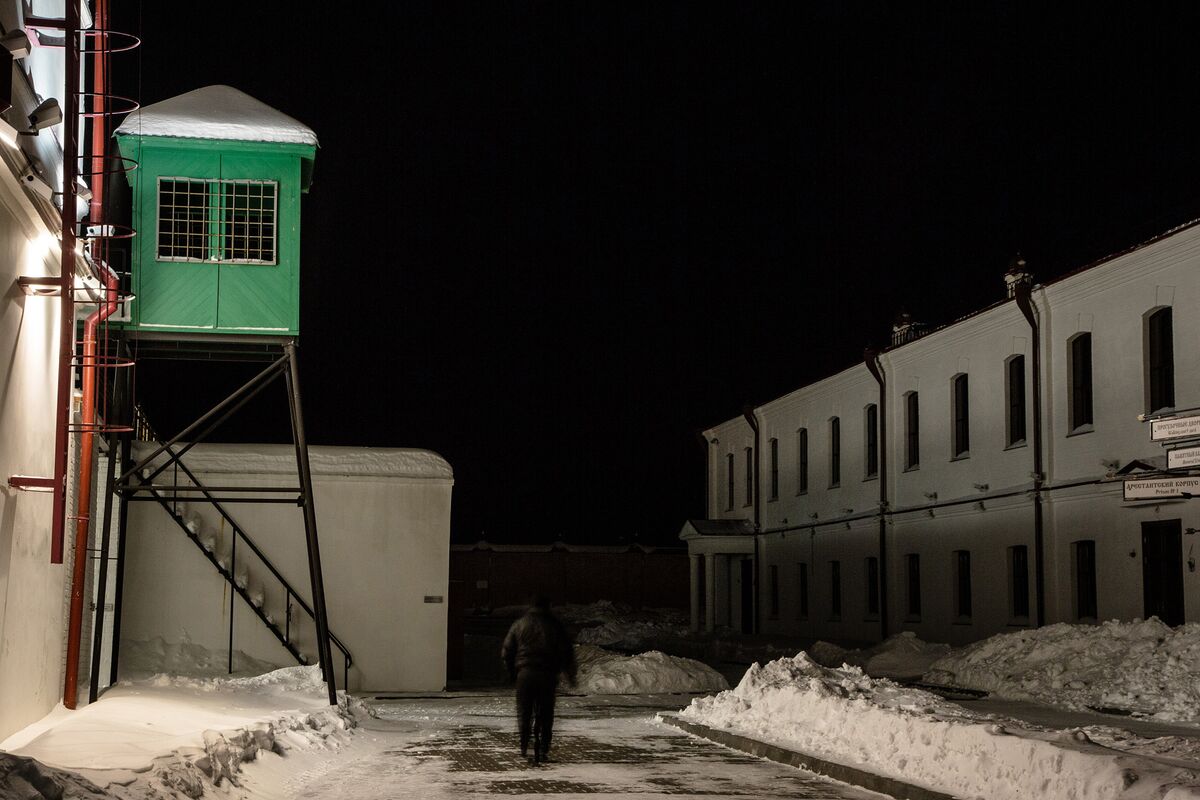
Alexander Aksakov/Getty — Prison Castle, Siberia, Dostoevsky’s “Dead House”
I’m not very disciplined even in whatever self-imposed ad-hoc ethical system I’ve imposed upon myself. I believe–intellectually–that good and evil are things that you do, not things that you are. And yet I find myself thinking of people as good or evil, or liking or not liking them, if I do not keep a short rein on my thoughts.
I have an old friend in prison. He is, I would say, a good man, who did something horrible. He had a psychotic break in a country (and milieu within that country, furthermore) that provides miserly help for mental health while providing generously for ease of access to guns. (I will say this: a man will not ‘seek help’ if said seeking ends his career, and he has a wife and child to support. This is to say nothing of a disease the very pathology of which obscures ones insight of self. But there are those windows of clarity, those moments of “what am I doing”, those moments when there’s an intervention, and because of the first concern you’ve squandered that.) How do I reconcile “good” with this? Genuine repentance, genuine horror and regret. I suppose “feeling” can be “doing”.
Anyway, I finally read Notes from a Dead House by Dostoevsky, a thinly-veiled autobiography about his time at hard labor in Siberia for being part of a socialist literary circle in a Tsarist Russia that had just been given quite a fright by the goings-on to the west in Europe in 1848, and so was particularly inclined to punish anything red-tainted with a heavy hand. I want to send a copy of this to my friend in prison. (He is not going to leave prison.) Tiresome as I am sure it is to have everybody define your life by ‘being in prison’ it is An Experience and a consuming one, and Dostoevsky’s humanity and love for his fellow prisoners is emblematic of the very best tendencies of the Christian tradition, what I consider closest to that of the compassion of the Biblical Christ. It is a compassion that does not deny that some of these men are scoundrels that would stab you for a dram of vodka, but they are men, for all that, and have an inherent human dignity and an inherent goodness they can choose, should they choose. Timshel. And ‘thou mayest’ be more likely to choose compassion when you are treated with dignity. Anyway, I wanted to pick his brain on how much Dostoevsky’s observations hold up with his own, with regard to the nature of man in captivity. He is a thoughtful and quiet man who helps his fellow prisoners get their letters and numbers, as he’s one of those rare breed of educated prisoners, not to make too fine a point on the extent to which ‘criminality’ coincides with ‘economic necessity’.
It doesn’t much matter because that state just decided that prisoners can no longer receive books, even straight from Amazon. I somehow doubt a book known for exploring the humanity of the incarcerated and the corrosive effect power has on those who wield it would make it past censors in the most permissive systems, but I am still pissed. I just donated a few bags of paperbacks to my local prison system (it’s one of the more permissive in the country, which is saying little), mostly science fiction and fantasy, nothing that would raise eyebrows, but all passing my personal and rigorous quality standards as Something Worth Reading, and I felt warm imagining somebody finding something good to read, something to take their minds outside the walls and speak to them as a human with inherent dignity.
Voluntary executioners
I keep what could generously be called a zibaldone–or less generously, a collection of scrawling and scribbling and doodling whatever is cluttering up my mind or whatever quotes hit me–and unsurprisingly one can trace what I’ve been reading by trawling through my notebooks. (I date sketches; that’s about it as regards organization.)* Notes from a Dead House was on my list long before the recentunpleasantnessup north and maybe my subconscious drove me to pick it of all the books on my queue, having been marinated in all this unfortunate to-do and misunderstanding of Rashomon-like subtlety.
“There are people, like tigers, who have a thirst for licking blood. A man who has once experienced this power, this unlimited lordship over the body, blood, and spirit of a man just like himself, created in the same way, his brother by the law of Christ; a man who has experienced this power and the full possibility of inflicting the ultimate humiliation upon another being bearing the image of God, somehow involuntarily loses control of his sensations. Tyranny is a habit; it is endowed with development, and develops finally into an illness. I stand upon this, that the best of man can, from habit, become coarse and stupefied to the point of brutality. Blood and power intoxicate: coarseness and depravity develop; the most abnormal phenomenon become accessible and, finally, sweet to the mind and feelings. Man and citizen perish forever in the tyrant, and the return to human dignity, to repentance, to regeneration, becomes almost impossible for him. What’s more, the example, the possibility, of such self-will has a contagious effect on the whole of society: power is seductive. A society that looks indifferently upon such a phenomenon is itself infected at its foundation. In short, the right of corporal punishment, granted to one man over another, is one of the plagues of society, one of the most powerful means of annihilating in it any germ, any attempt at civility, and full grounds for it’s inevitable and ineluctable corruption.”
I wasn’t even much thinking on the corrosion to the soul that is being given power over another human being–the corrosive effect on any person, even a ‘good’ person–maybe because I read that chapter within a few hours of the murder of Alex Pretti. I was thinking on what Dostoevsky called “voluntary executioners” in the translation I read.
There are two kinds of executioners, those who of their own will are executioners and those who are executioners by duty, by reason of office.
Bad people. People who are bad. Fundamentally broken. I was not practicing my equanimity, my defining-people-only-as-doing; I was thinking about the sort of person who joins ICE because it looks like good fun. Do I wish to believe in the existence of the ‘voluntary executioner’ who is somehow more intrinsically bad, more evil, than the ‘involuntary executioner’ who only takes on this role through economic desperation or plain naivety and is through the corrosive poison of the very nature of the job itself made into a bad person? I am again going against my sincerely-held belief that evil is what somebody does, not what somebody is, but there are people who take such glee in inflicting pain I admit I see them as ghoulish. Well, it is perhaps more comforting to think that there are people just ‘born wrong’, independent of intellectual disability or brain malformation, than that anybody, even the kindest person, has the germ of this cruelty within them, and it is only a matter of choosing whether or not to nurture it. Timshel. Some natures make choosing evil more pleasurable or less painful than it is to others, perhaps. I can only hold that it is not fair that some people have innate checks on cruelty and others do not, but though it is not somebody’s fault they were born with low empathy or sadistic tendencies, it remains their responsibility to manage it. It is not fair, but it is. Fair and not-fair, deserving and not-deserving, are ultimately distractions, child’s excuses; one deals with what is.
Are they different and does it matter, when the trigger is pulled on a gun pointed at a man’s back? Why do I want it to matter, when a bullet kills just as surely no matter the thoughts or inner self or true self or what-the-fuck-ever of the person squeezing the trigger?
This hurts you more than it hurts me
I have yet to see a category of person who supports ICE: a person who thinks that what is being done is necessary, but dislikes how much pain it causes. I have seen nobody with the surgeon’s sobriety at inflicting ‘necessary’ pain. All I see is glee that pain is being inflicted.
Is there a person who thinks all the raids are ‘necessary’ (for… the health of the country, I guess) and who also acknowledges and grieves all the human misery it is causing?
Even indifference, self-preserving callousness, would let me know there is still a soul in there that needs to be guarded. Or, it means that one does not see the people suffering as fully ‘human’ or believe that they are truly ‘suffering’, which is its own defect of the soul.
Who do what is necessary
I’ve been on the internet long enough that I’m difficult to surprise with pretty much any level of pretentiousness or self-delusion, but the DHS penguin tweet (I’m not linking to it) just about did it.
My first thought was that “Americans have always known “why” [the penguin walks away]” was a reference to Ursula K. Le Guin’s The Ones Who Walk Away from Omelas, the sort of delusional reading of a story I saw so often wherein people manifestly bad, manifestly on the side of wrong (here I go again with those value judgements) interpret an unambiguous parable about self-denial in doing what is right as in some way having something to do with them doing what is wrong, but taking on the ‘self-denial’ of the esteem of their fellow humans who just refuse to see that they are only doing what must be done, unpleasant as it might be. It’s the primary balm to the soul of somebody who does something evil — to re-frame it as something that is Unpleasant but Necessary, to recast oneself as the equivalent of the outcastes who took on unclean jobs like corpse disposal and butchery that were necessary to the functioning of society, but that nobody wanted to think much about, just reap the benefits of, and then hate the people doing the deed from which they benefited, from which they were spared guilt. A proud, stoic person who loves humanity so deeply, so purely, that they will do what is necessary even if those people who benefit hate them.
How does this square with my earlier complaint about ghoulish joy? I guess butchers cannot have too much empathy for the cows they slaughter, but they don’t like it when their children run from them because they smell of blood.
——–
*If you are picturing one of the ~aesthetic~ strictly-formatted and regimented journals, the sort of spread that looks just lovely on an Instagram or Pintrest with neat handwriting and makes you want to go analogue… well, keep picturing that if it encourages you to keep a notebook; I’ve found the practice immensely gratifying, but nobody is going to look at my notebooks and get inspired.**
**I do like looking at ~aesthetic~ journals and hipster-ass stationary pages; my follow list on personal Instagram is a shameful catalogue of actually now that I think about it precisely the sort of marketing nonsense I’ve ranted about.