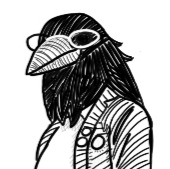
That’s Not a Horse
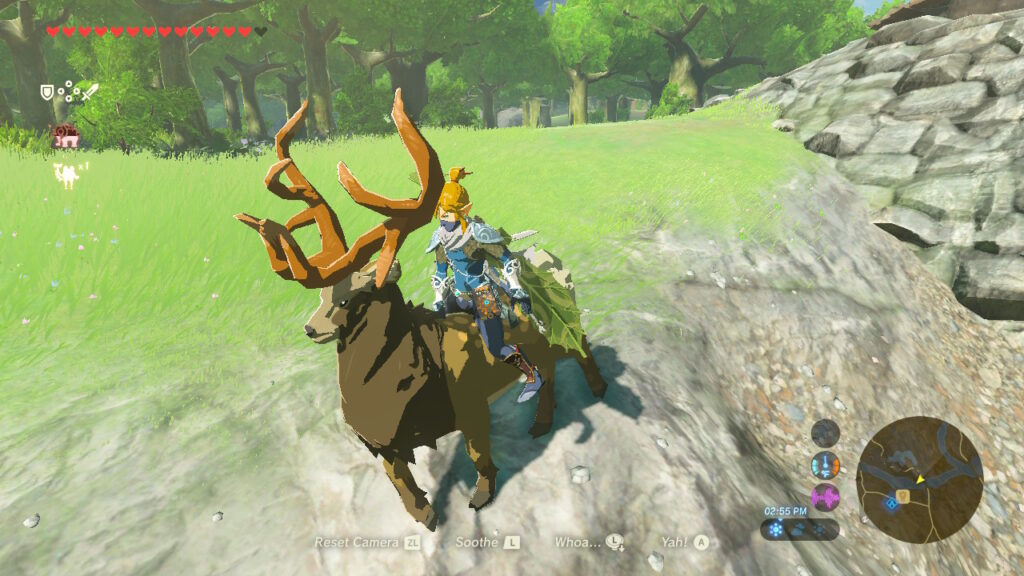
Buck
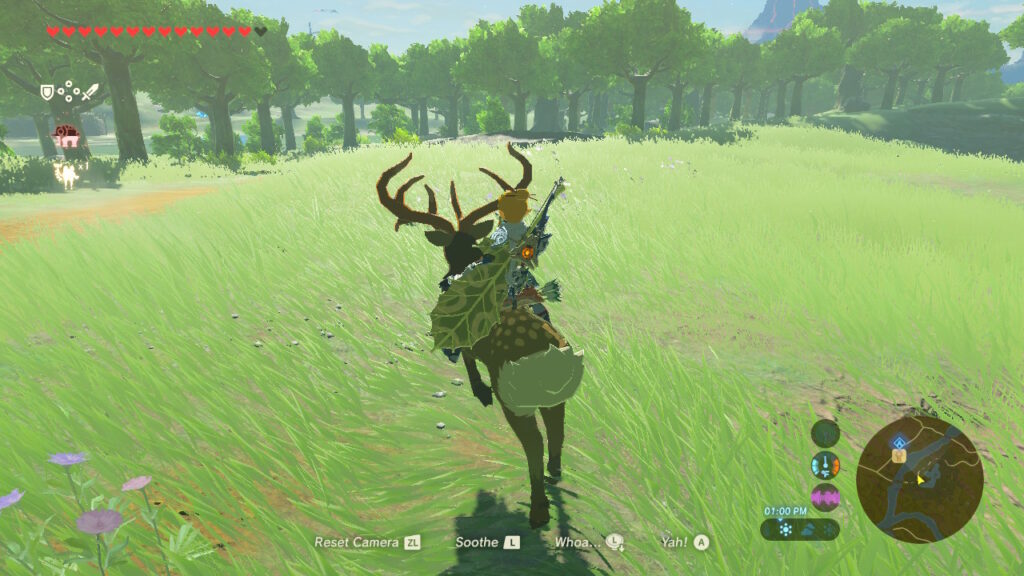
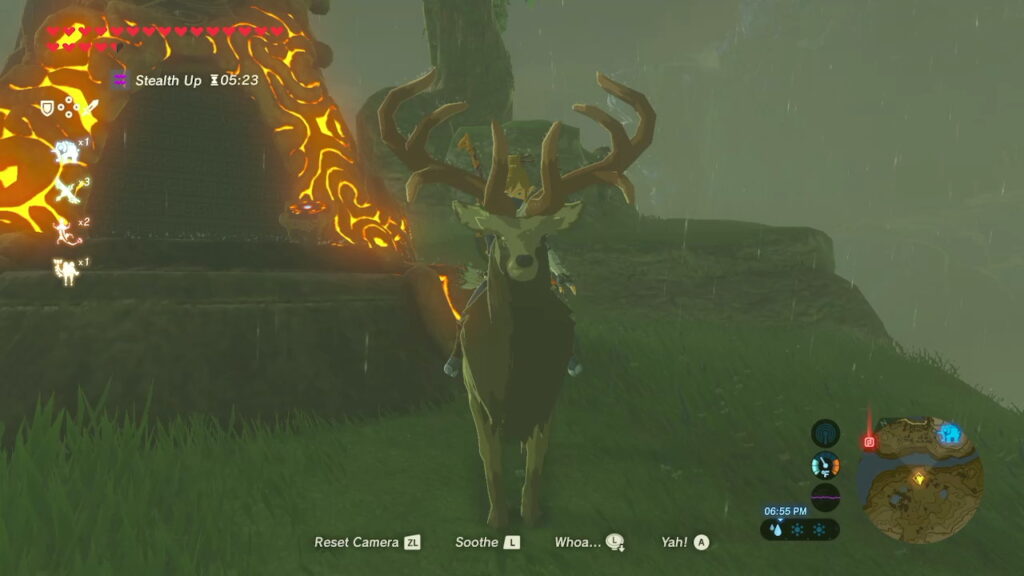
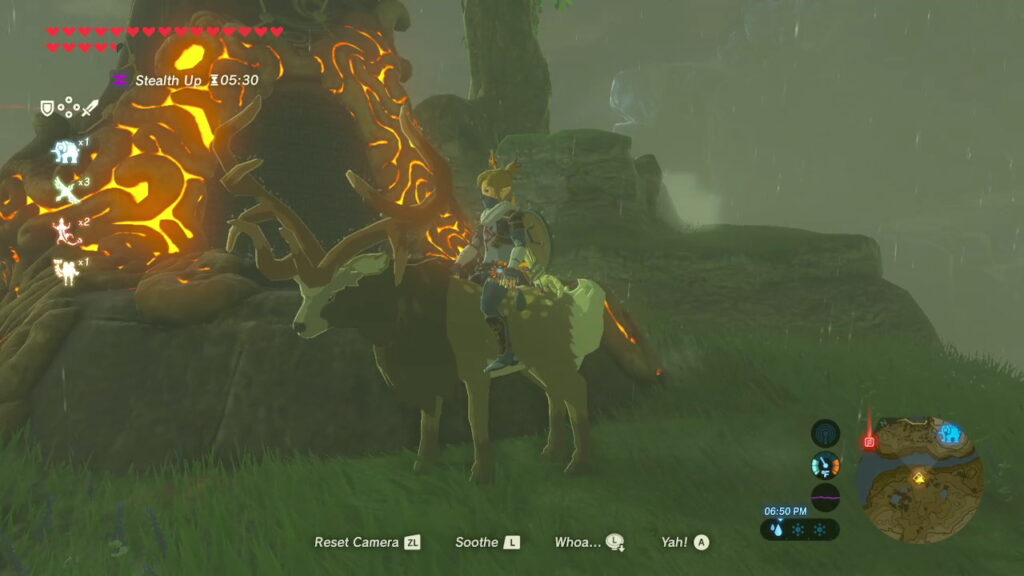
Doe
Lord of the Mountain
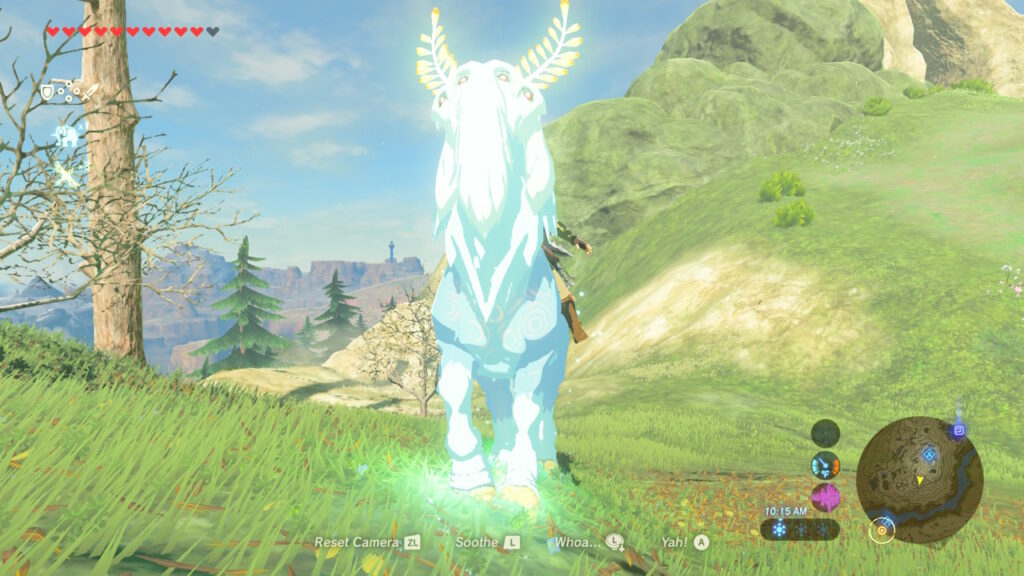
That Is a Horse (Stable Roster)
Breath of the Wild
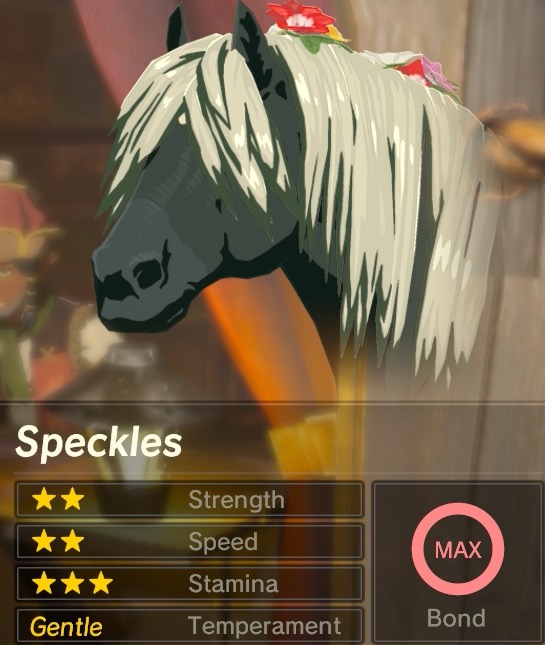
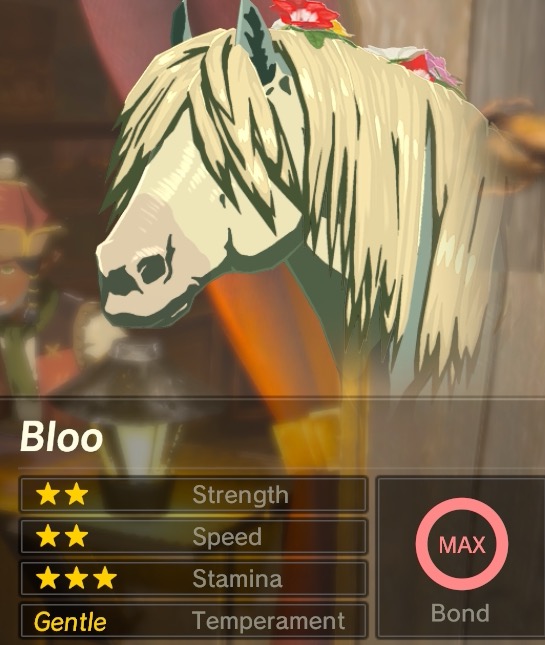
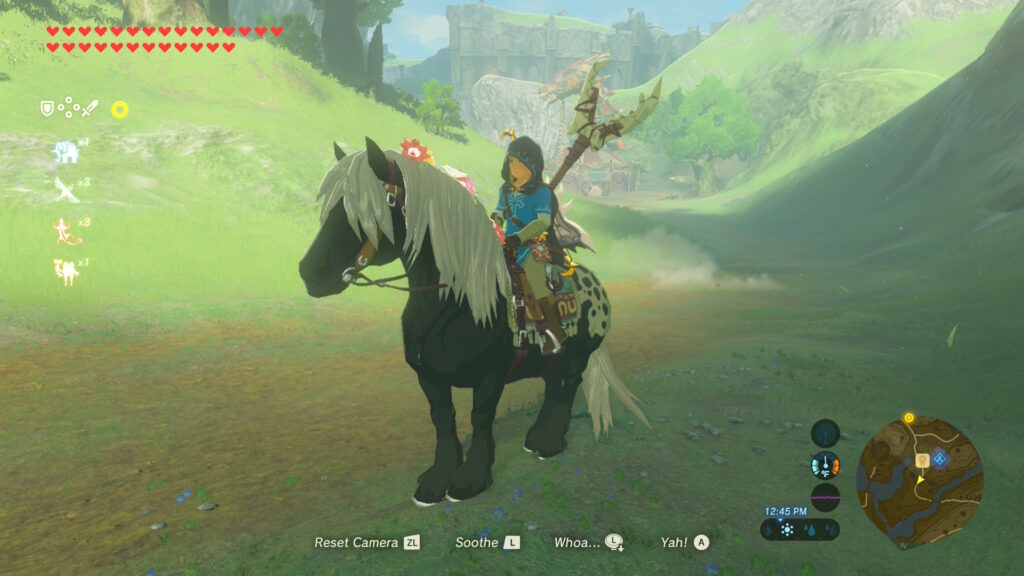
Speckles and Bloo were my early-game catches, and I’ve never turned out a horse just because a stronger one came along. We’re ride-or-die pack. Bloo is almost certainly named for Blooregard Q. Kazoo from Foster’s Home for Imaginary Friends. I got a good picture of him with one of the stable dogs, all of whom I make a point of feeding when I come around, so we’re [holding two fingers together] like that. Speckles, well:
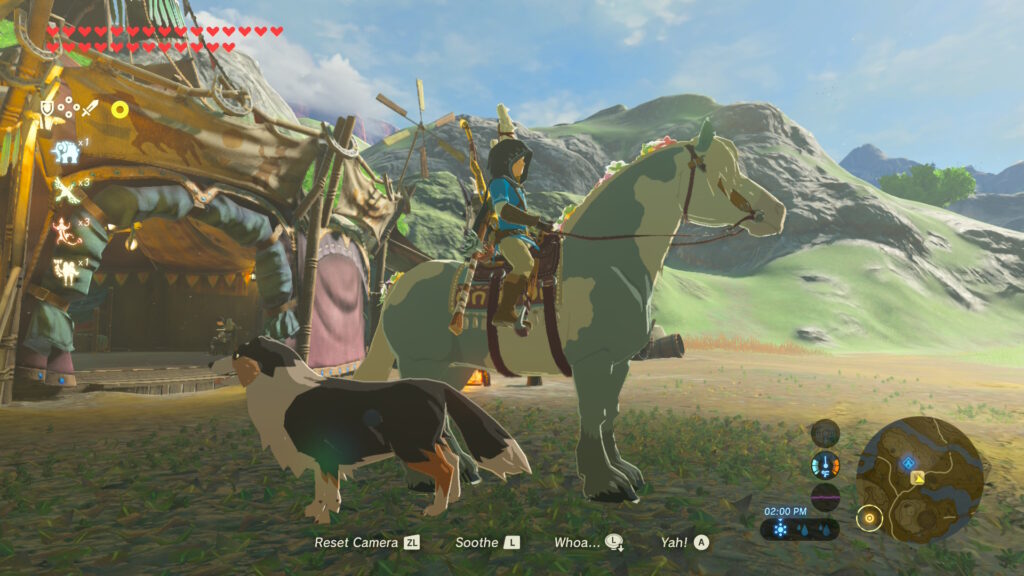
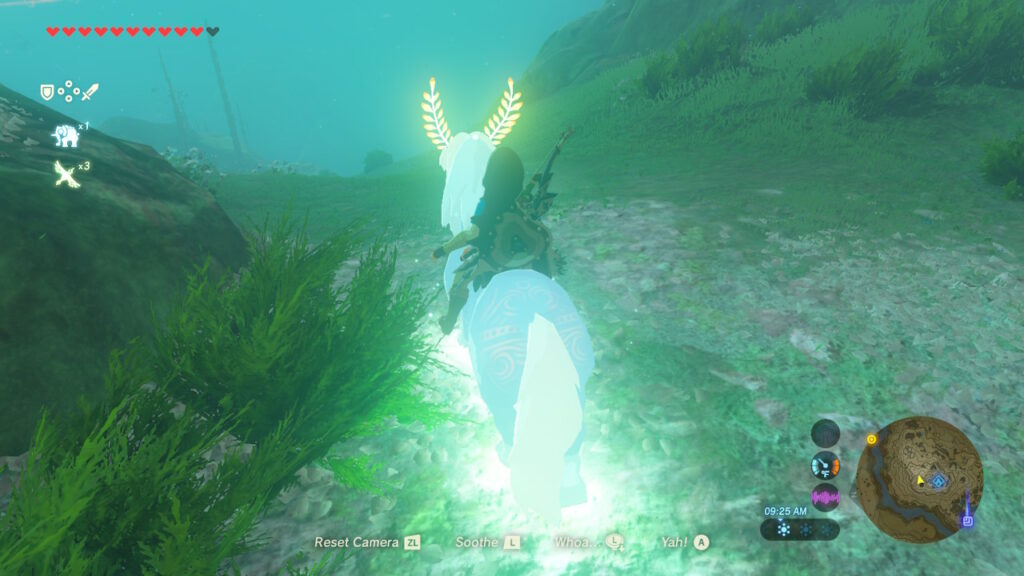
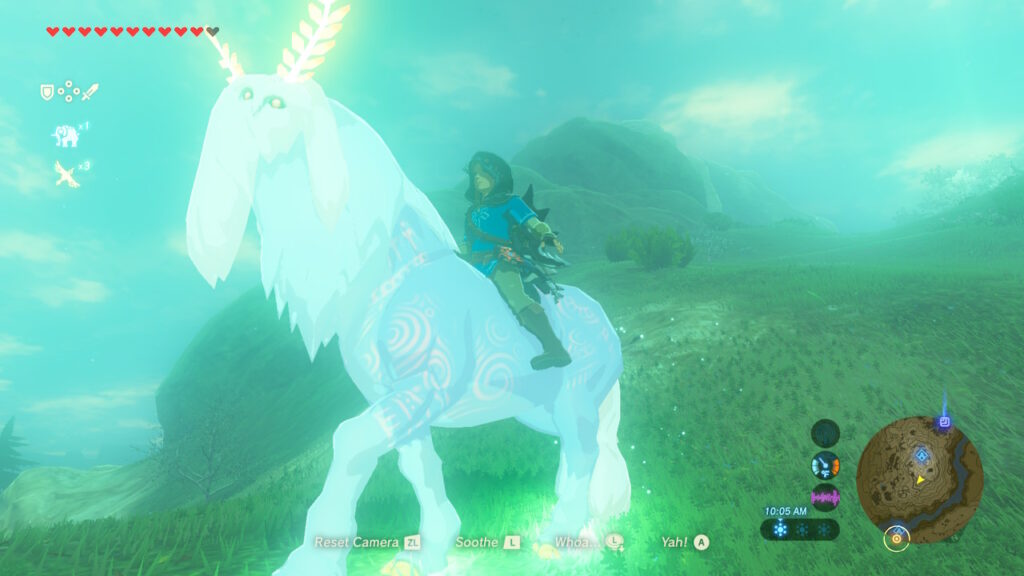
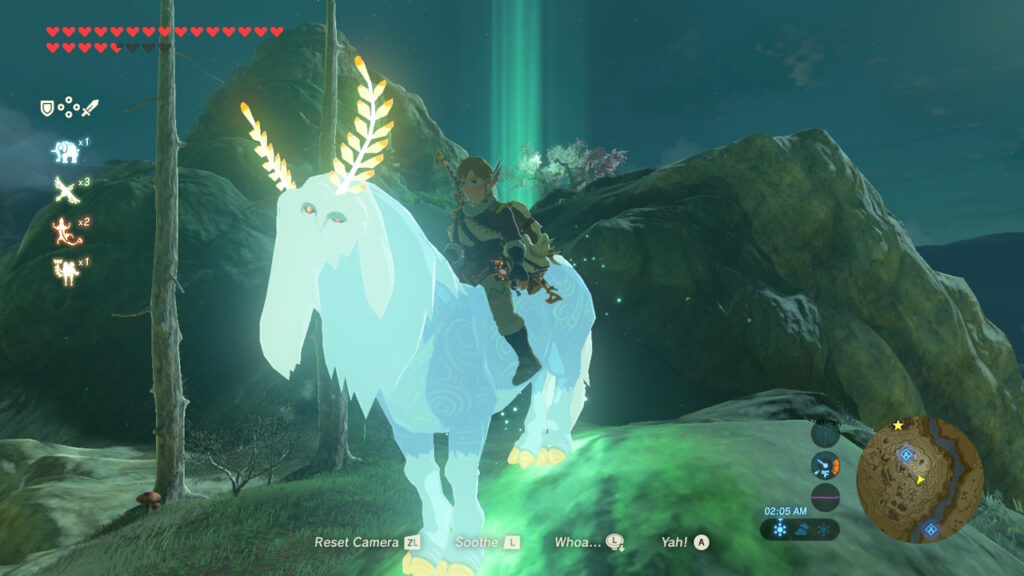
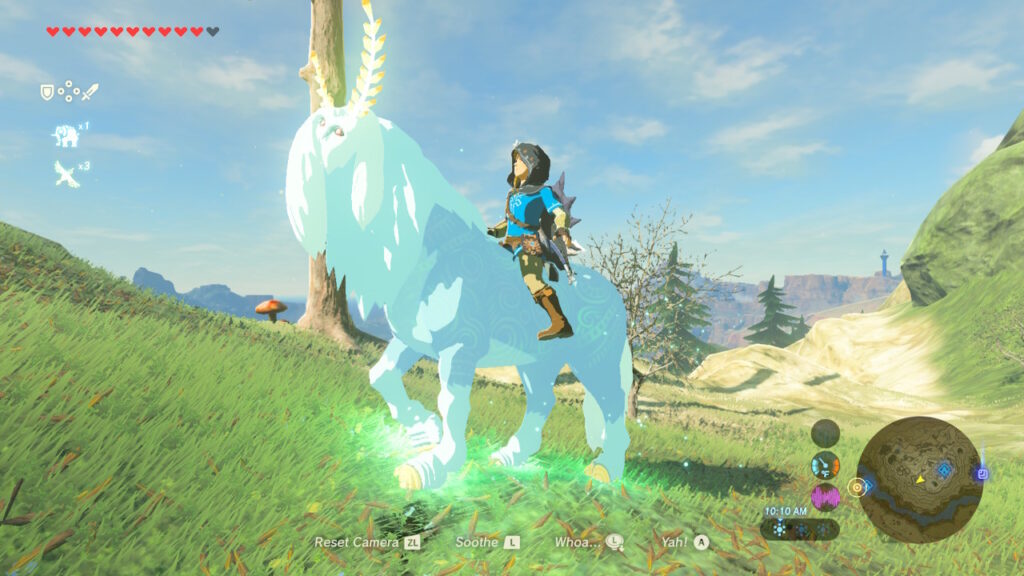
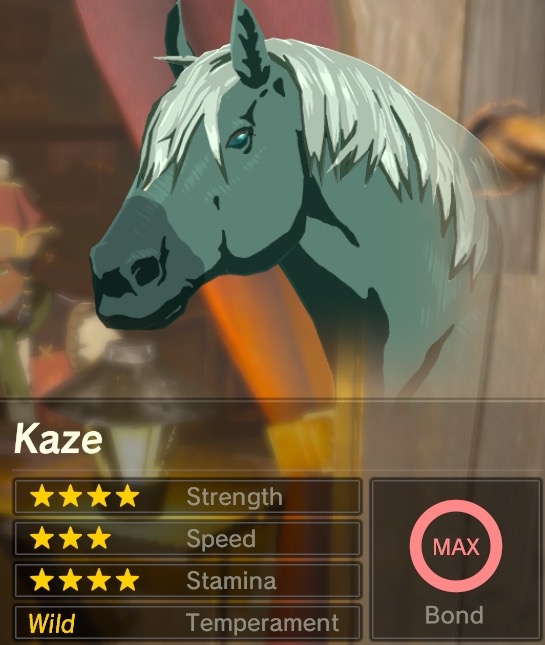
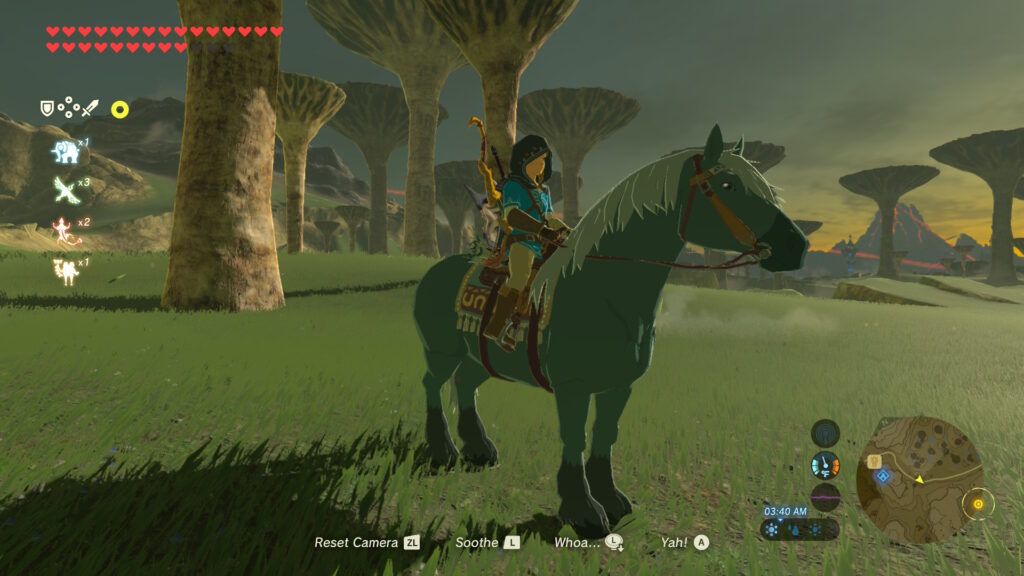
I love the teal horses; it’s a delightful flourish in a game that otherwise relies on ‘realistic’ designs. Kaze (風) was my partner most of the game, steadfast, stoic, forgiving me for always warping halfway across the map without him and coming back to the stables to ask for him. I assume like real horses these guys know a stable means a warm stall and a meal, so they always end up back at one of them. As to the nature of the service that warps the horse to any stable in Hyrule upon request, I can only speculate.
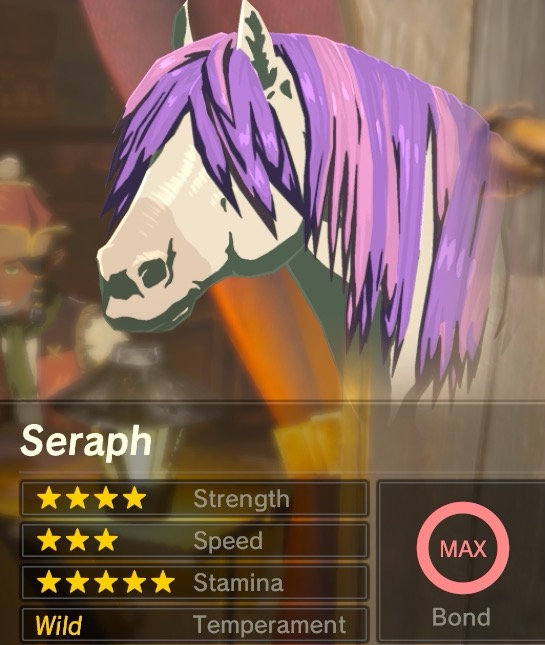
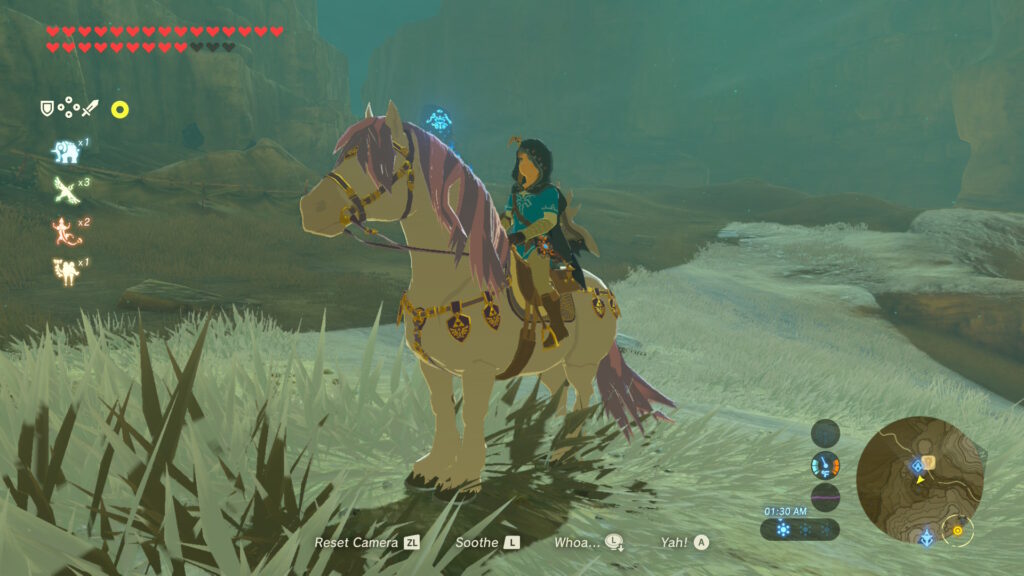
I usually do not have Seraph the royal white stallion (named for a friend’s cat, may he rest in peace) in the royal livery, because it seems bloody daft to parade around Hyrule with a fine horse decked out in gold and other riches. Then again, no matter how little gold Link is flashing on his person he is harassed by every highwayman, monster, and ne’er-do-well in the area, so it probably doesn’t much matter. I also just like the stable-standard kit best, the colorful woven saddle blanket and all that. Apparently I left this noble beast with weebass anime hair last time I played, for reasons that I am sure made sense at the time.
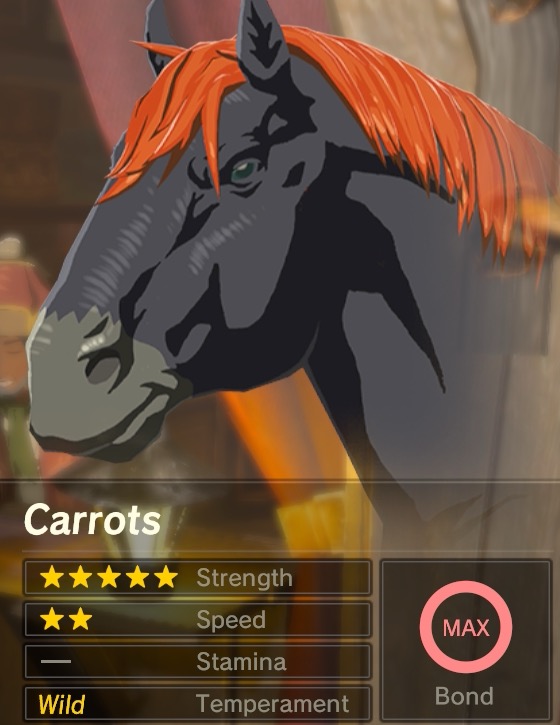
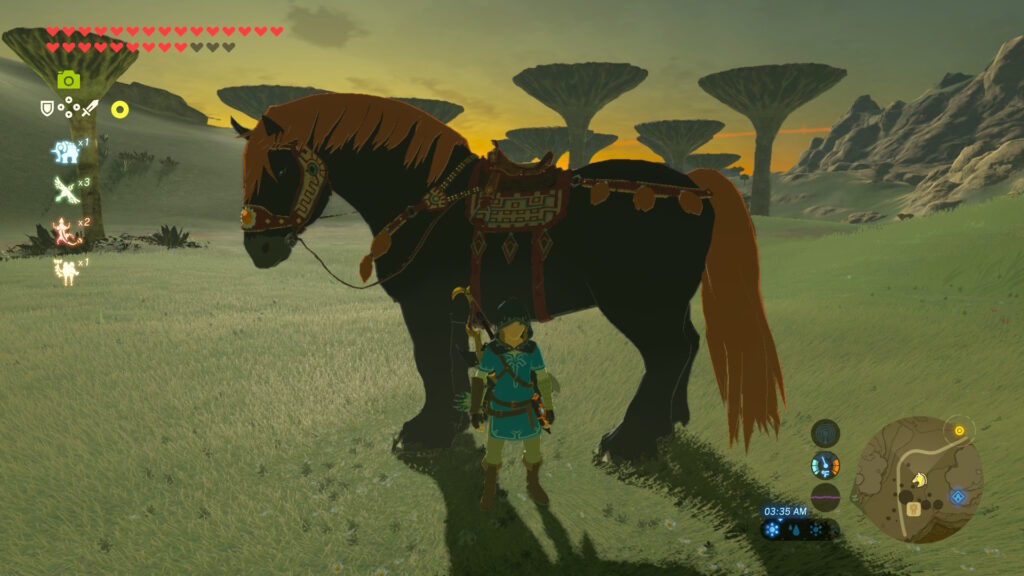
Carrots the giant horse I later wanted to re-name Jasper (like from Steven Universe), but the silly twee vegetable name has grown on me. She is magnificent, is she not?
Tears of the Kingdom
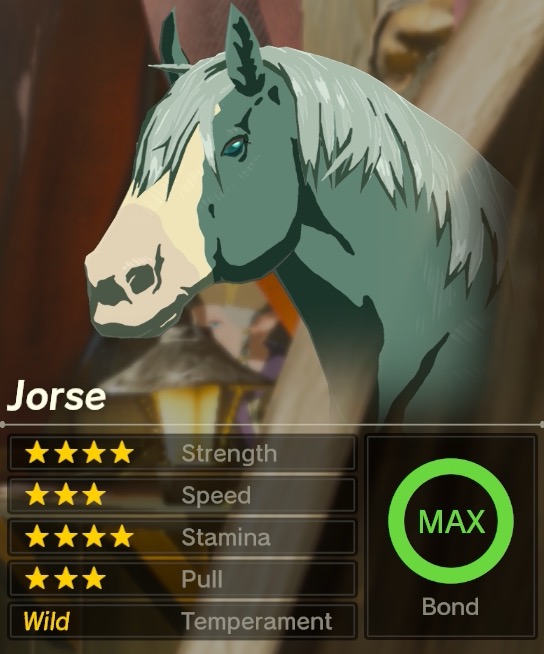
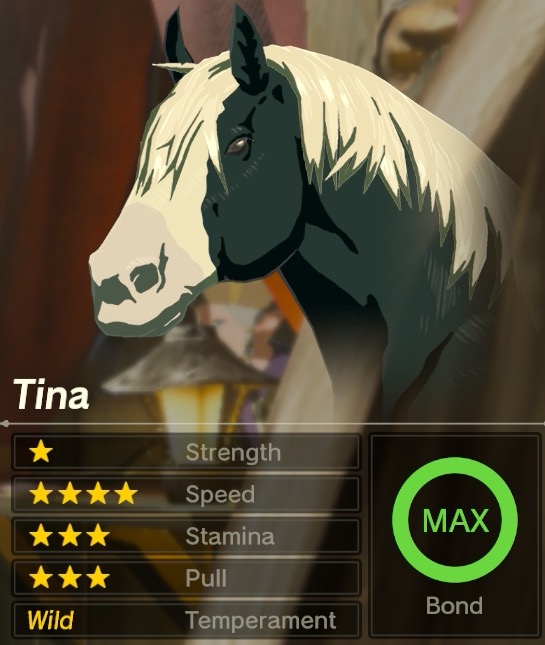
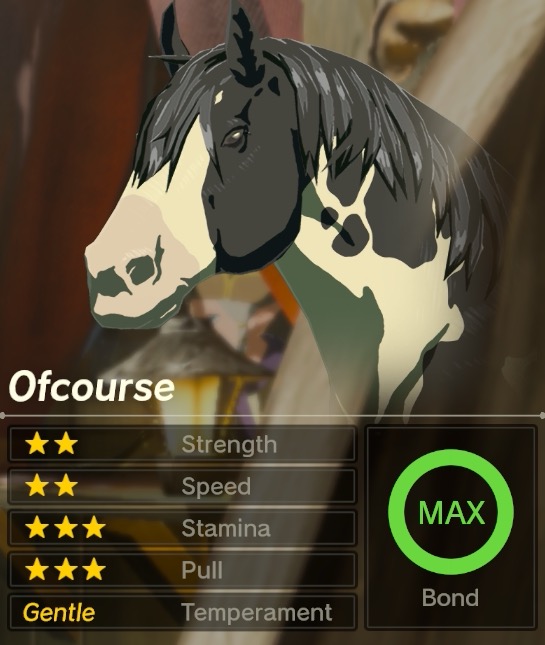
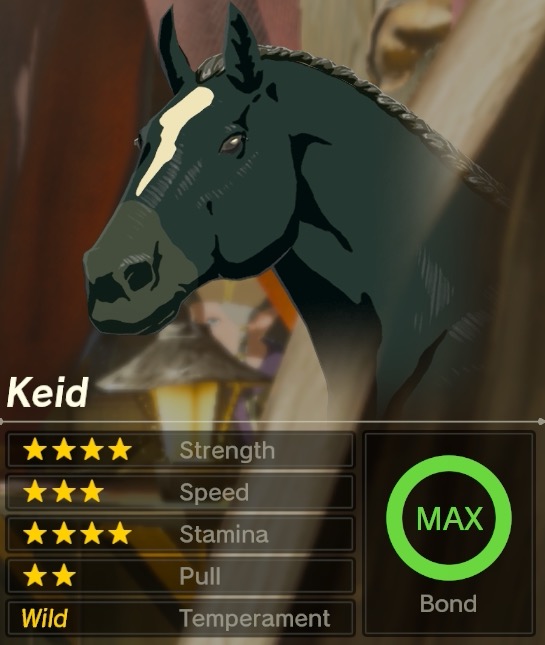
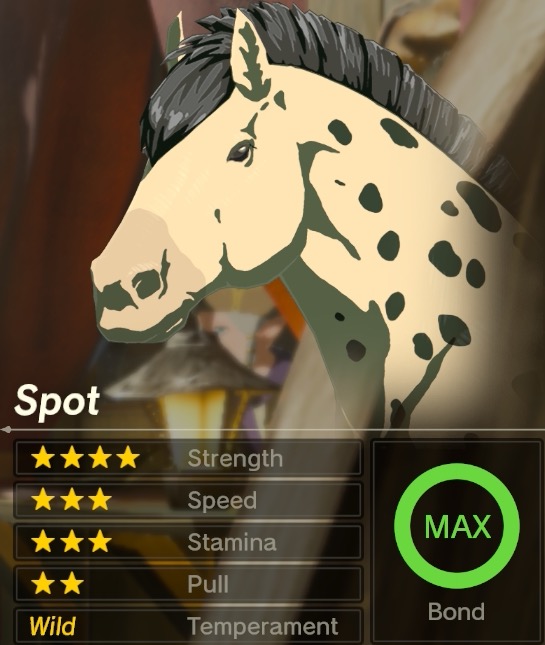
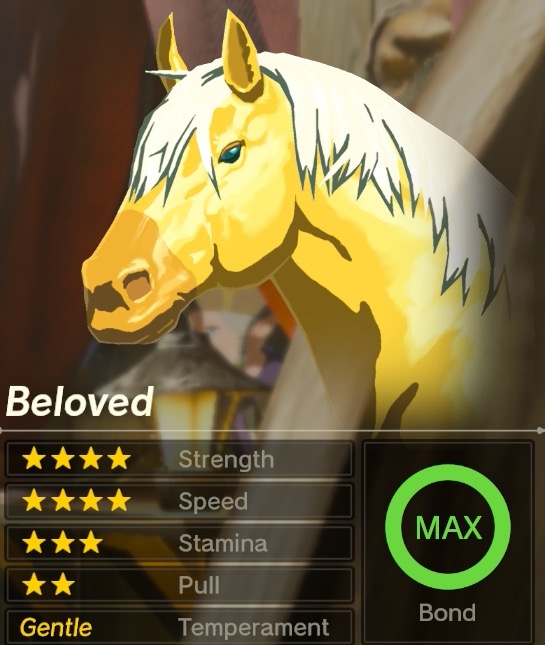
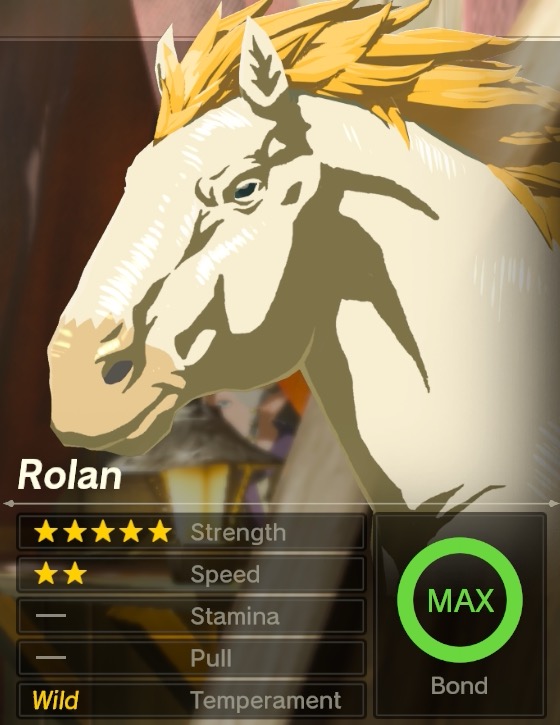
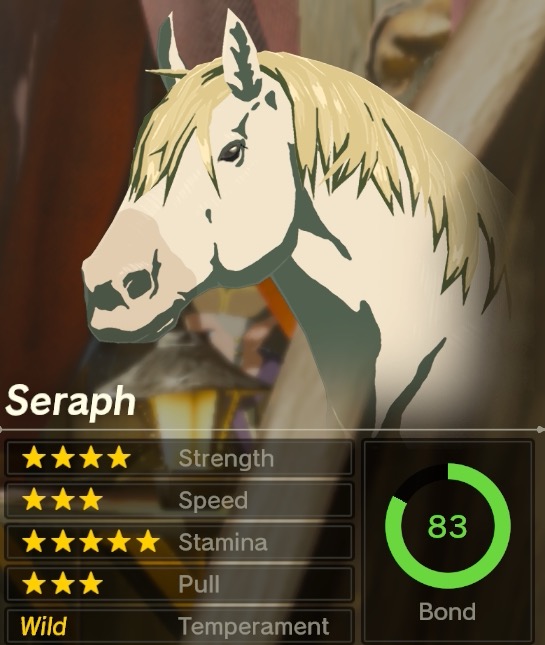
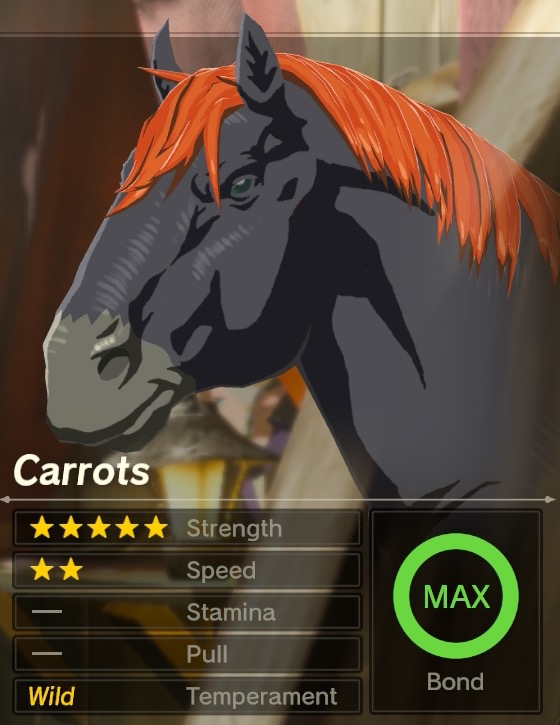
Going back through my stables I recall that one can inherit one’s horses from BOTW in TOTK, and I was excited about this until I realized that because my partner had his save file on my account I was going to inherit his horses instead. I was more disappointed by this than an adult had any right to be.
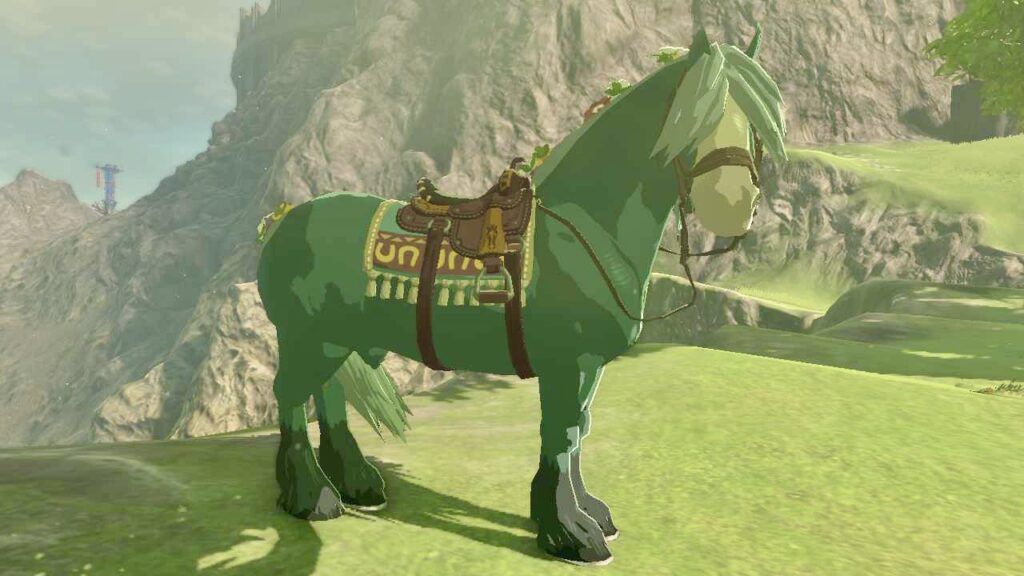
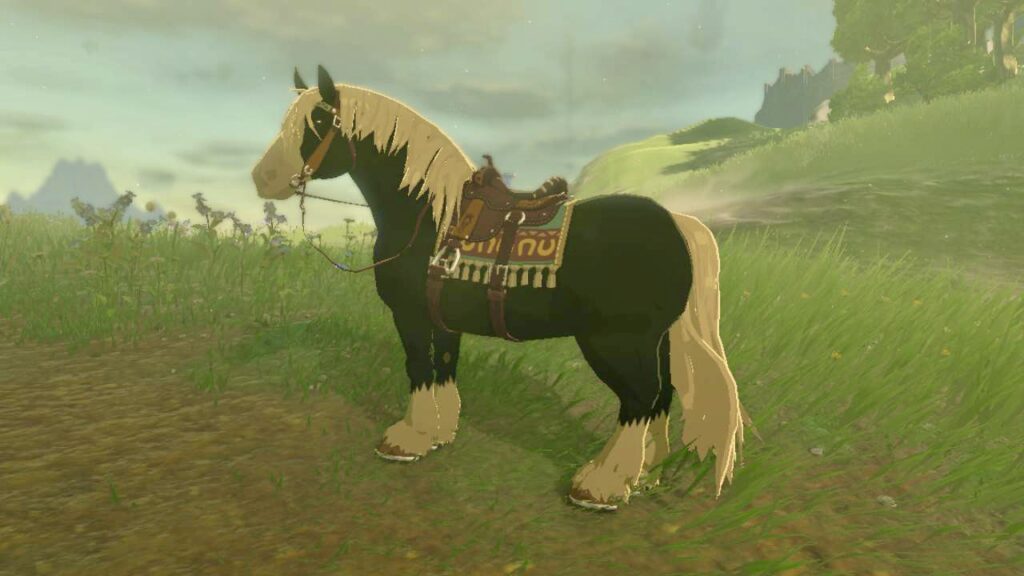
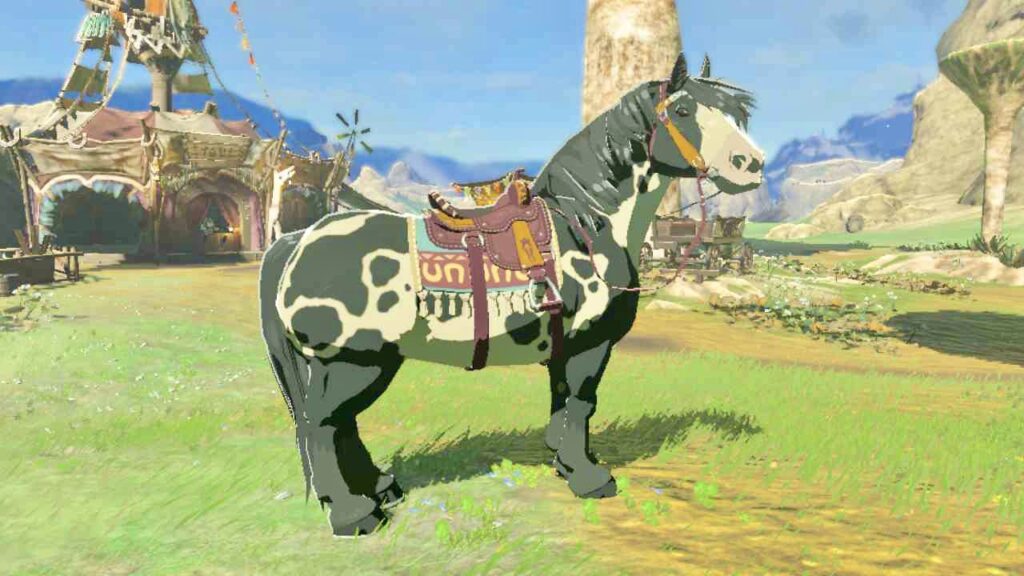
Anyway, from that inheritance comes Jorse, Tina, and Ofcourse. Not sure if “Jorse” is pronounced with a Spanish J (Hor-say) or with the Anglicized hard J sound. Maybe it depends on whether or not he’s acting up. Tina I am certain is named for Tina from Bob’s Burgers. I bet she would love these games and spend an inordinate amount of time stalking horses. (Then again, the Belchers are not exactly wealthy and she’d have to be fighting for Switch time with Gene and Louise, who probably don’t have the patience to sneak up on every horse in Hyrule and would rather go throw bomb barrels at bokoblin.) Ofcourse — well, because a horse is a horse, of course, of course. I’m equally certain my partner got that from that one episode of Bob’s Burgers where Tina goes to horse camp and the instructor is “contractually obligated to say that” and not from Mr. Ed.
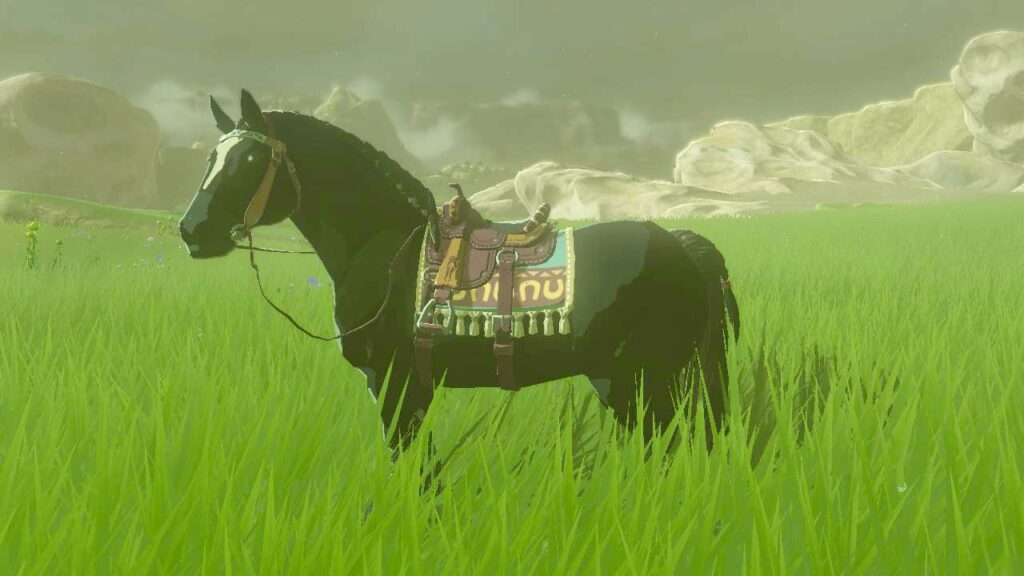
Keid is named for 40 Eridani, the triple-star system in Eridanus where one can find the planet Vulcan. (I firmly choose to believe Vulcan is out there and the more recent studies claiming there is no planet orbiting 40 Eridani A to be anti-universalist propaganda/fake news.) She got her stellar name in reference to the white patch above her eyes, which is called a “star” in the equine world. (I had a massive Horse Girl phase where I picked up a lot of this trivia.)
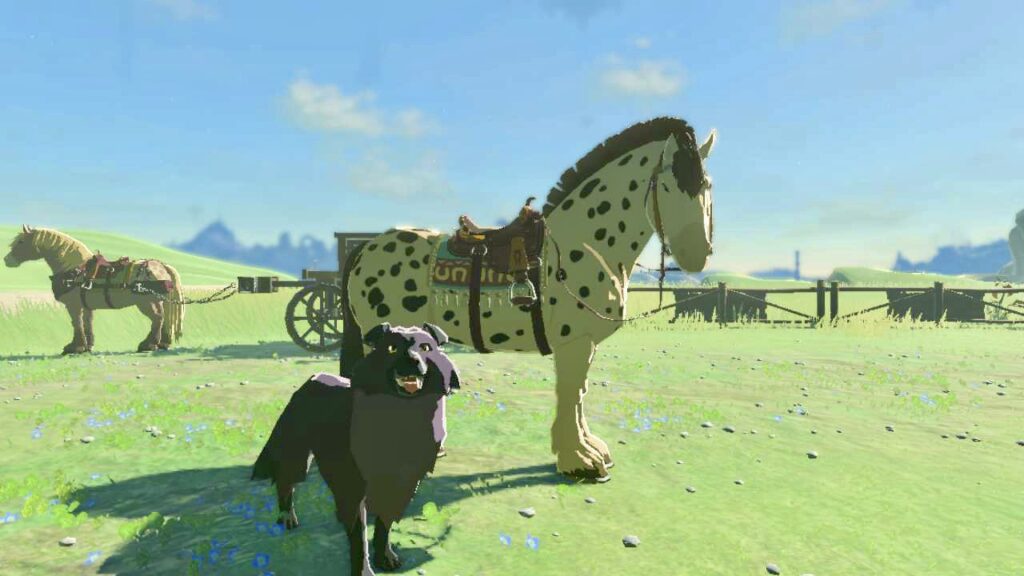
Spot comes pre-named from a quest, and I could not think of a better name for him. I have had a dalmatian puppy plush since infancy also named “Spot”, so I have an affection for the name.
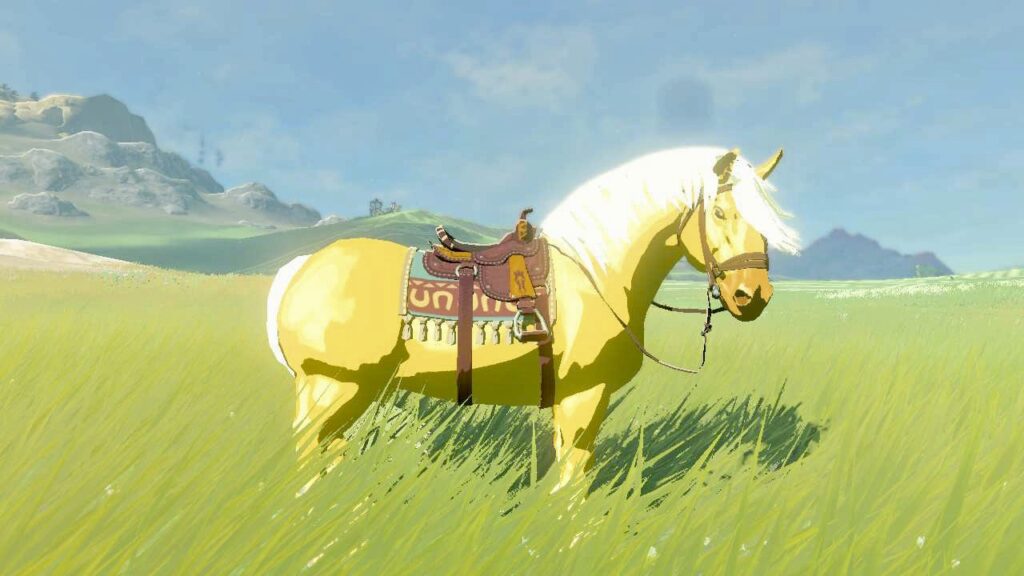
Beloved the golden horse is named for the Fool (or Lord Golden, or Amber, or the Tawny Man, or however they’re calling themself at any given time) in Robin Hobb’s Realm of the Elderlings series. I almost named him Dennis, because he is a golden god. (S/O everybody who did name him Dennis, including my partner.)
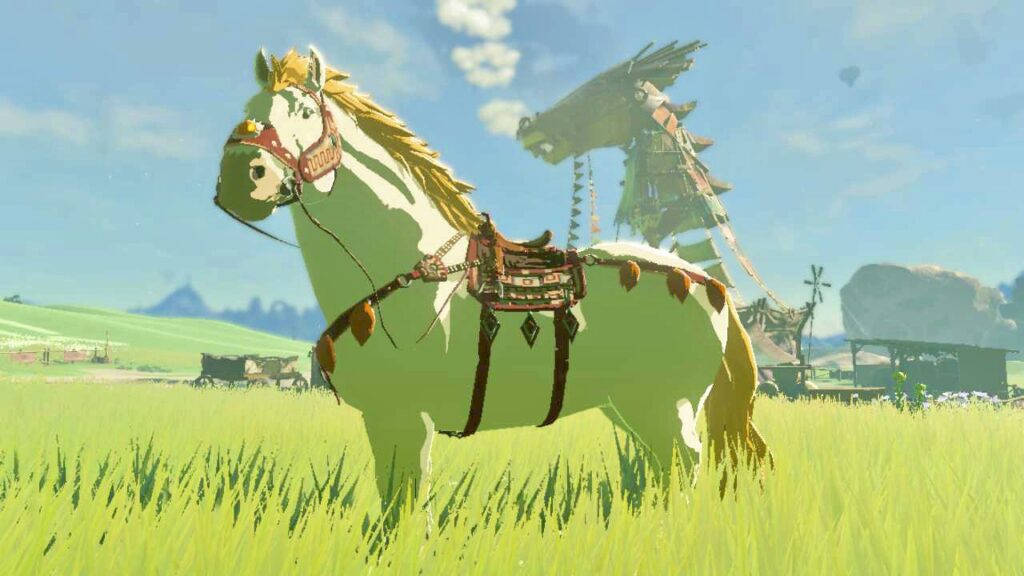
Rolan the giant white stallion must be so-named for the Companion (magical mind-speaking white horse soul-bonded to a human companion) from the Valdemar books.
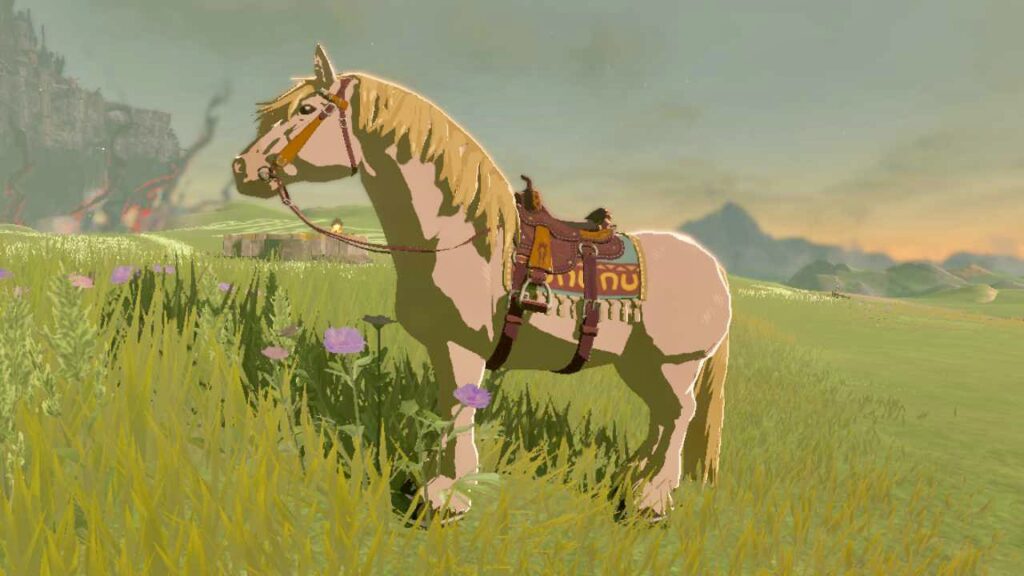
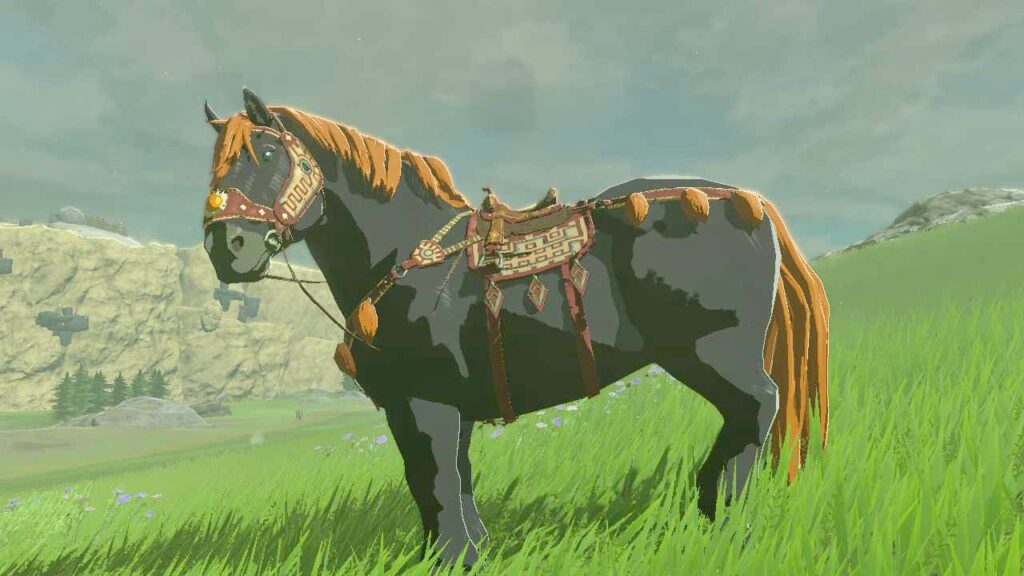
Seraph the royal white stallion and Carrots the giant horse were not transferred from my BOTW file because of the above-discussed profile confusion, so I named their TOTK counterparts in honor. (Also, apparently I was not as close with this Seraph as I thought; I will need to spend some quality time.)
Foreign Languages
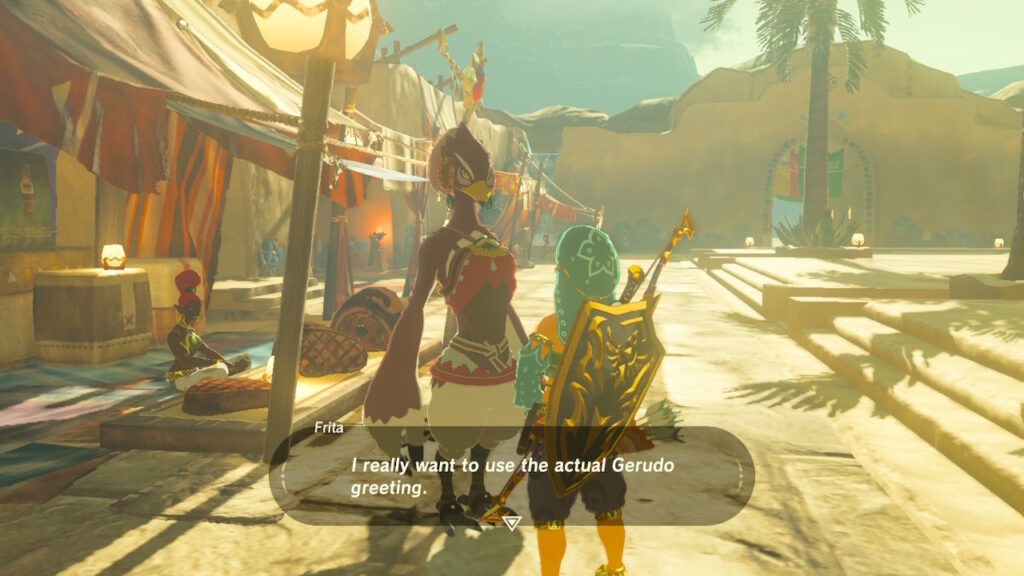
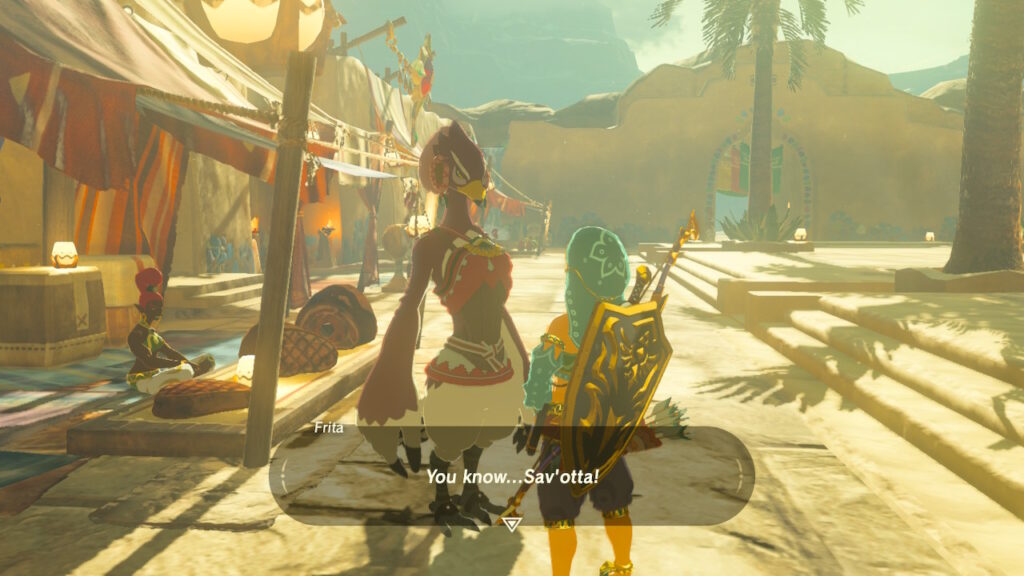
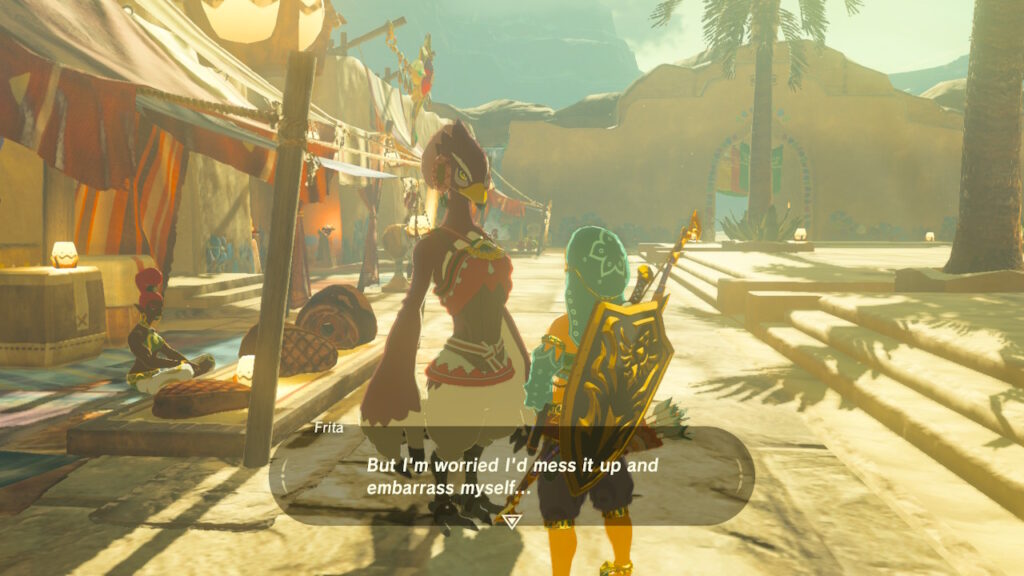
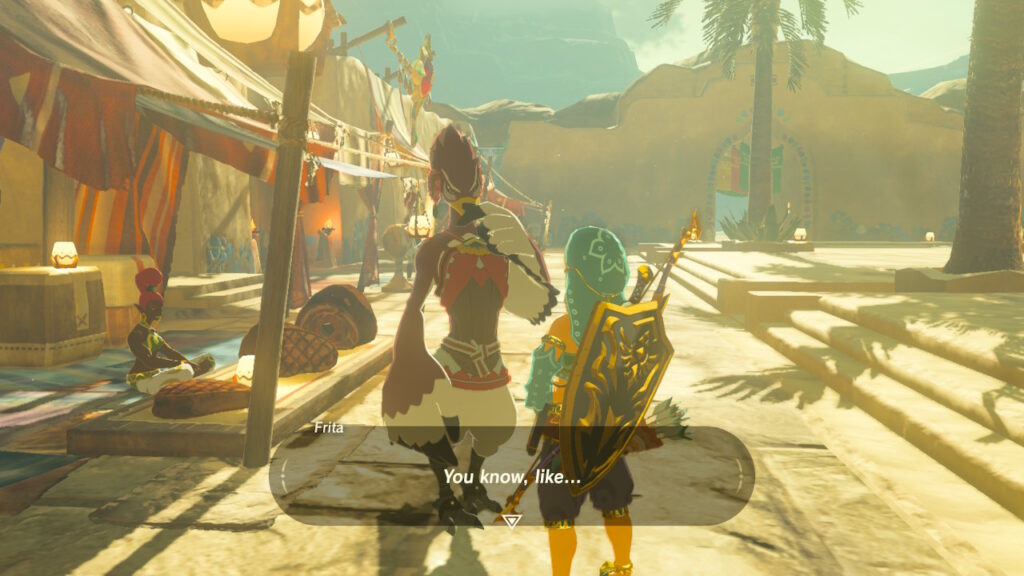
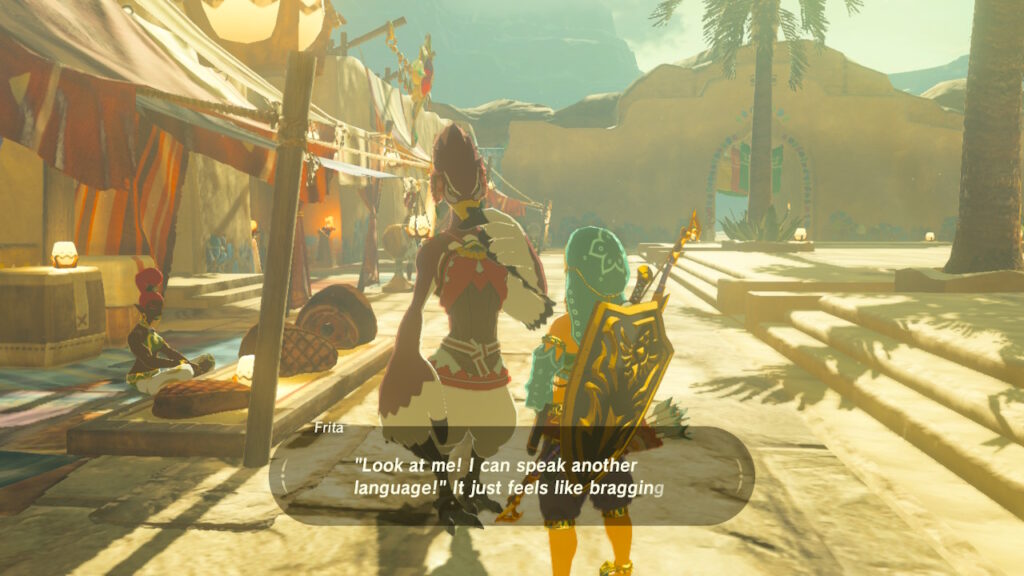
How I feel when I speak [anything]. (Frita the Rito traveler and Link-in-drag are talking in Gerudo Town.)
I think a lot about future-nostalgia: an anticipation of a more empty, post-apocalyptic world. Indeed, this would not be an apocalypse one had to experience firsthand with the tribulation and loss associated, but a life constructed totally within the new world. I consider BOTW and TOTK exemplars of this atmosphere–the spare, single-piano soundtrack of the over-world makes me think of air and grass freshly cleansed with rain. Link’s ease of movement with the glider* and his ability to climb pretty much anything are freedom made manifest, and I spent an inordinate amount of time in those games just wandering. It felt like a state of meditation or worship.
I consider the setting of Nausicaä of the Valley of the Wind a refraction of this idea–it is still a polluted world with rampant warfare and deprivation, but (especially in the manga) there is the promise of a not-too-distant future where the earth is purified. It is a clear aesthetic influence for BOTW and TOTK. The source of conflict in Zelda, however, is not desperate fighting between neighboring fiefdoms over land and resources, but sourced in one Bad Guy against whom the people of Hyrule unite. Ganon is unambiguously the bad guy–there is no two-sides to this even if you squint really hard. You can sympathize with him, but he is unambiguously the one doing evil here. I usually dislike stories with a simplistic morality like this. However, in this case, having one “bad guy” contributes to the sense of vast space.
*Yes, I did spend most of the tutorial island portion of TOTK jumping to my death.
First post 17 Dec 2025