I’m becoming convinced there are certain songs I need to relegate to a certain period in my life. Or–only listen to them when I want to recall a certain period. I have heard The Eagles multiple times since childhood and the reaction I had in Okawachiyama was exceptionally strong given the contrast between rural Kyushu and the Texas Panhandle.
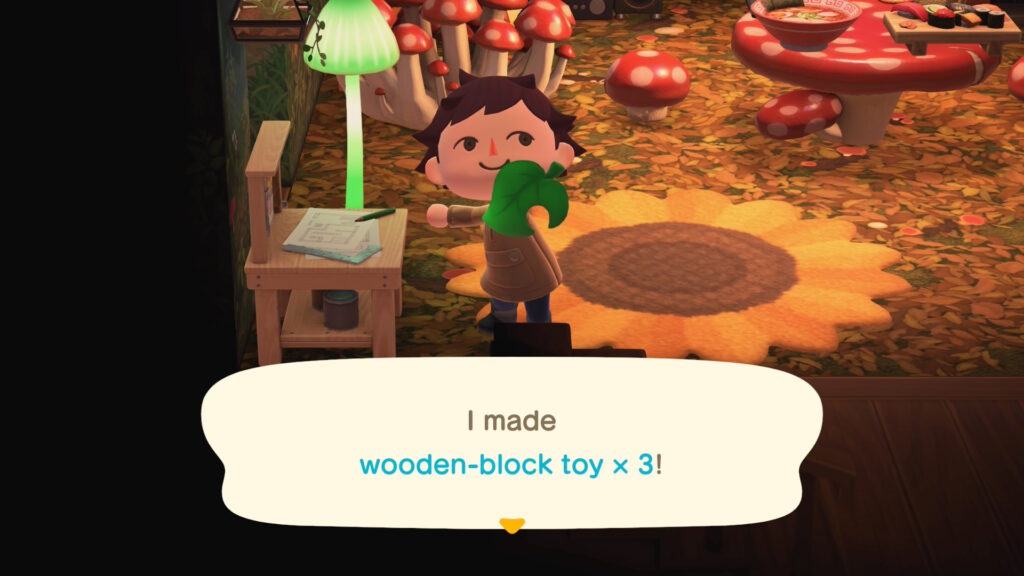
New Animal Crossing: New Horizons update came out. Crafted something for the first time in years and the crafting ‘sounds’ whipped me back to March 2020 so hard I had to just sit with it a while.
Images you can hear. It is two-thousand-fucking-twenty. (Screenshot: Animal Crossing, New Horizons, showing off product of DIY.)
March 2020 sucked. And yet I felt only nostalgia thinking on it, a distant sense of pain. Almost, for a moment, wanting to go back. Maybe because I wish I could have done the past six years over in a lot of ways.
The Suika Game sequel (Suika Game Planet) also came out, and that piano theme that plays in the background whipped me back to 2023 so hard I was sitting in a daze remembering being in Yodobashi Camera in Hakata, late on a weekday night, watching an impromptu Suika Game tournament being held on one of the display TVs in an otherwise dead department store. This was not the first time I had played the game — it had gone viral just before I had left for Japan, and had played a lot of it back in California right before going. I played a lot in my apartment in Fukuoka late at night. It was still Yodobashi Hakata I was thrown back to. I had hardly played it in the time after. I am, as I type, undoing the force and clarity of that memory, sitting on the couch while my partner plays and getting the song back into my skull; something is being re-written, something is being lost. Not completely lost, but the force of recollection is no longer making me freeze.
The gentle smiles of the fruits are as the sakura*, the pastels as the morning frost.
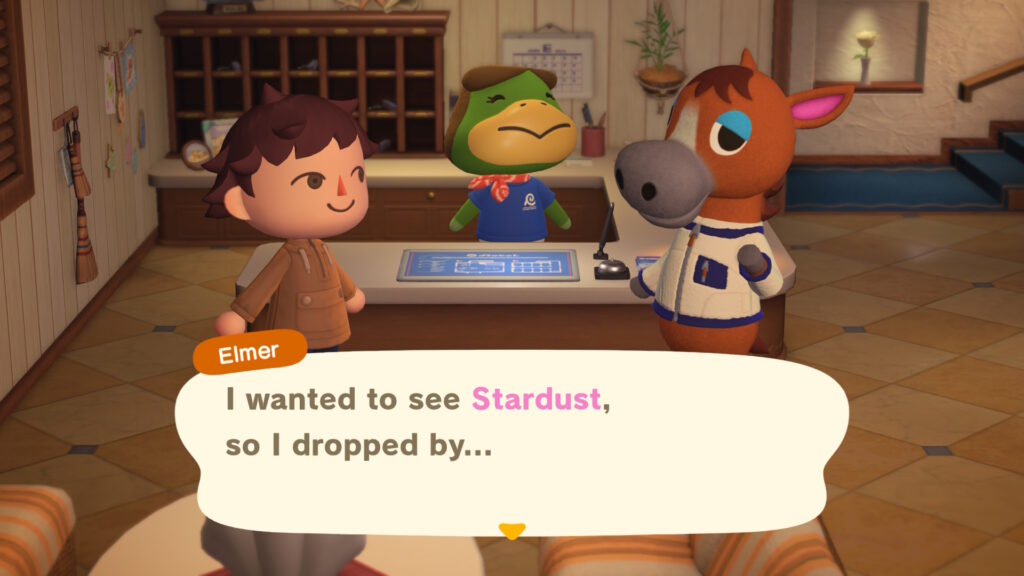
As an aside: this did make me laugh out loud, which gets credit, even if it is a cheap laugh:
Your name is what. (Screenshot: Animal Crossing New Horizons: Elmer the Horse’s first introduction in the hotel.)
Christmas at the childhood home, which means a lot of lazing about. I catch that Hobbit-like tendency to generally overindulge, in food and in indolence. This also takes the form of not checking the news to torment myself with goings-on that I cannot do a damn thing about, not today. I am one of those people who live too much in the mind who–while I am intellectually aware it is not and therefore torture myself for it–feels doomscrolling like to activism, awareness like to action.
All going according to custom past few days–I’ve been comfortably pillowed by the sand–but this morning I got a push notification of Breaking News.
It’s tedious to announce, with some flourish, as though it would make any difference if I could be arsed, that I put the phone down after some confirmation of what, exactly, happened, made coffee, and played vidya instead. “Instead.” Instead of what? Self-flagellation is just narcissism with its back turned. What the Odonians on Anarres would call “egoizing”, or performative. I’m not going out protesting, which, while it may arguably have once pushed policy, and may even now act as PR for the American intellectual-worldly class in showing the world there are Americans who Do Not Approve of the actions of our government (I doubt The World gives a shit), seems to have no effect on this regime. Feeling bad about that inaction doesn’t make it any better, in a moral sense.
And yet I wonder…
———–
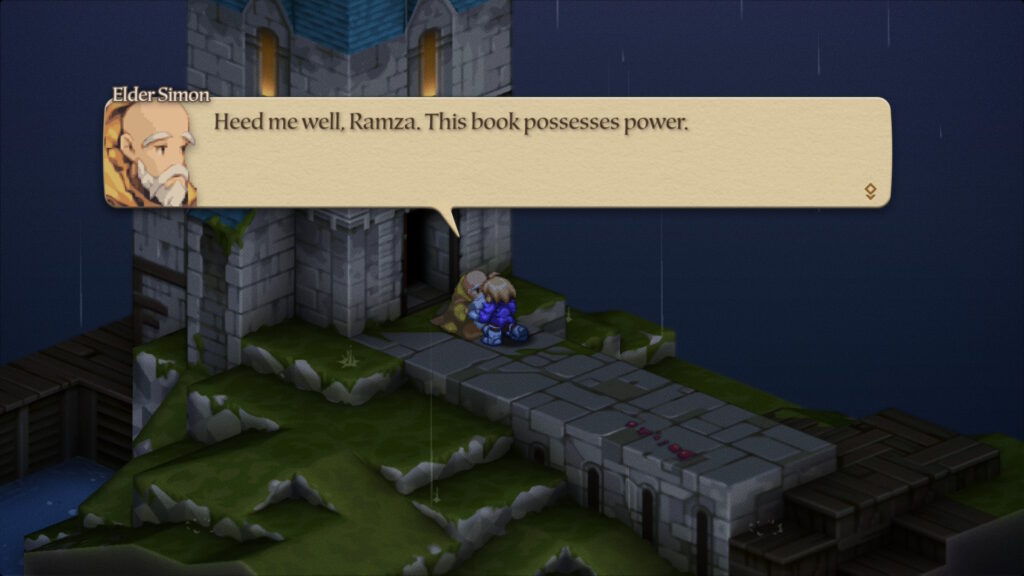
Of course I hit this part of the game today.
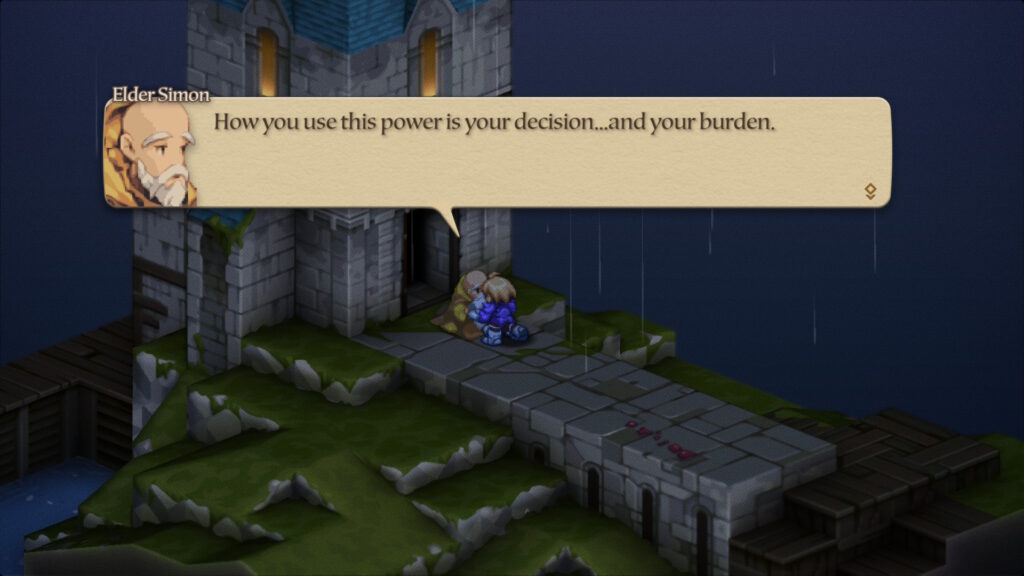
Elder Simon: It exposes the deception of the Church–that its doctrine is founded upon lies. Ramza: A book? Elder Simon: That is why we fear it so, and have kept it hidden since the beginning… Heed me well, Ramza. This book possesses power. How you use this power is your decision… and your burden.
-from Final Fantasy Tactics: The Ivalice Chronicles
(I don’t even have to explain this; you can guess exactly what is going on in the narrative if you’ve ever, once in your life, consumed narrative media.)
This is so typical of the intellectual writer-ly class, the sort of person who likes video games enough to write them, or books, or movies or what-have-you: the idea that ideas and Truth have such inherent power that they can change everything just by being revealed. If you are the sort of person who is in thrall to ideas this is bone-deep truth. But even the most rarefied of the intellectual class limits itself to hemming and hawing and acknowledging if this Truth negatively impacts their material conditi0ns. No, I do not know if I am talking about Elder Simon-the-character or the writers of FFT or the players of games; everybody in that feels culpable. Even within the context of the game that “truth” is going to come escorted at the barrel of a gun**.
But here I am reminded of why I have a fondness for this game:
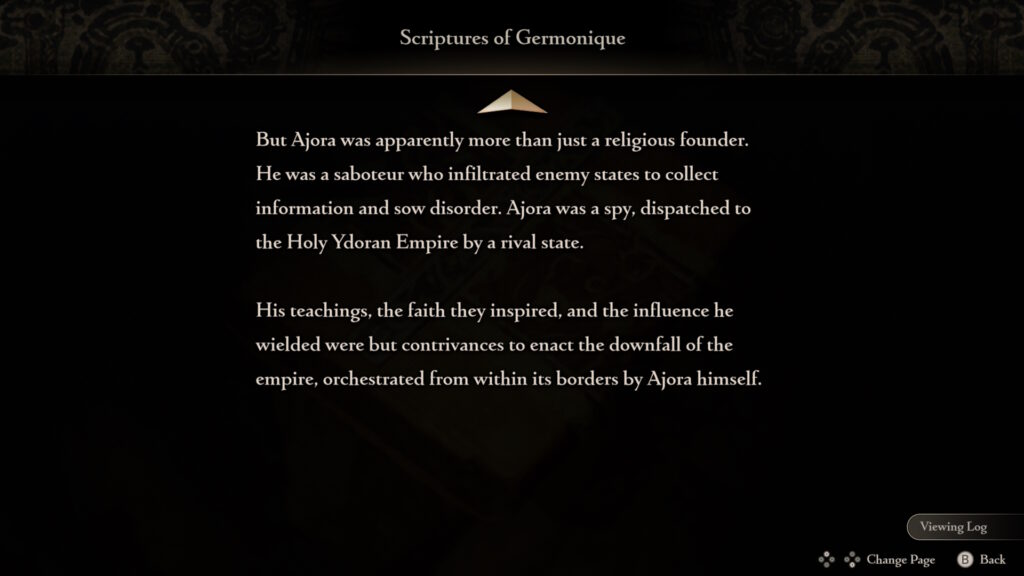
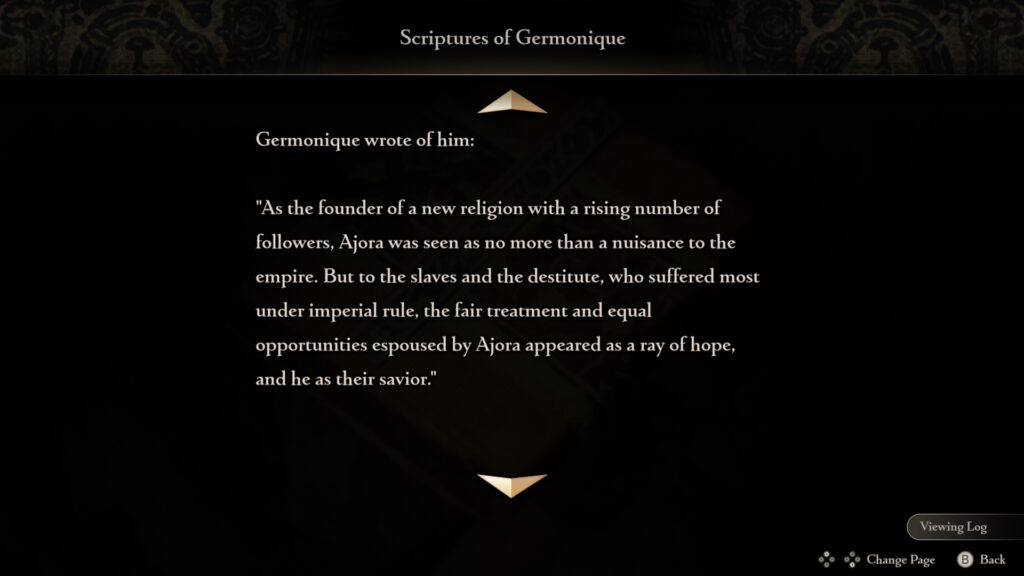
“But Ajora was apparently more than just a religious founder. He was a saboteur who infiltrated enemy states to collect information and sow disorder. Ajora was a spy, dispatched to the Holy Ydoran Empire by a rival state. His teachings, the faith they inspired, and the influence he wielded were but contrivances to enact the downfall of the empire, orchestrated from within its borders by Ajora himself. Germonique wrote of him: “As the founder of a new religion with a rising number of followers, Ajora was seen as no more than a nuisance to the empire. But to the slaves and the destitute, who suffered most under imperial rule, the fair treatment and equal opportunities espoused by Ajora appeared as a ray of hope, and he as their savior.”
—Scriptures of Germonique, or: that powerful book of Truth Elder Simon was going on about
There is acknowledgement of the fact that it is by appealing to material conditions that one makes a movement. I haven’t much sympathy for an Empire-as-entity (i.e. not individual people in that empire against whom atrocities of opportunity are committed) that is undermined this way; I don’t give sympathy to the target because the intent of the opposing power was their own imperial gain, but I don’t respect that opposing power, either, other than on an strategic level. Is that opposing empire a “liberator”? Sure, to the people who materially benefit, but the opposing empire gets no moral accolade for acting on its own interests. Don’t run an empire on a fundamental inequality, then, if not because it is wrong in a moral sense, then only because it is strategically unsound on a century-scale. All you can hope for the people is that there is more net material justice in distribution of resources and ‘rights’ as a result–that the burden of the underclass of humanity is lightened, and not just shifted to another part of the underclass.
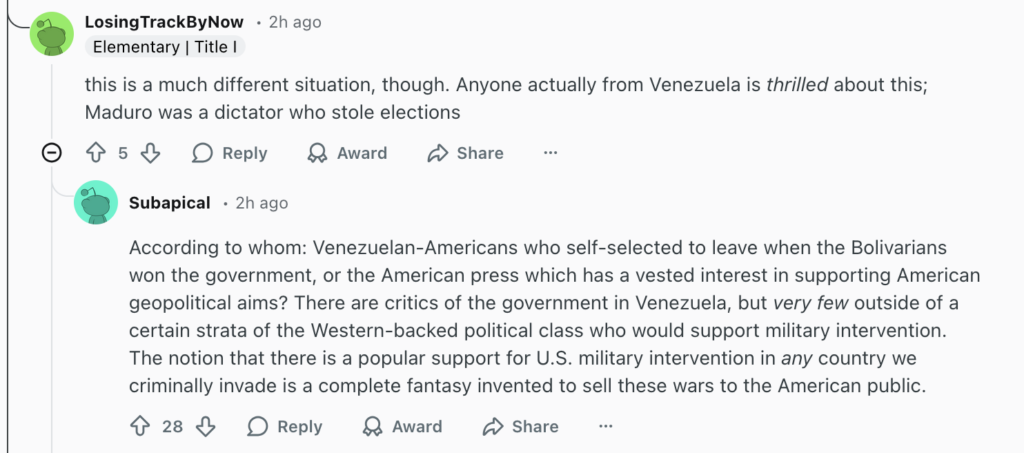
This sort of we’re-the-good-guys-actually justification is what I’m talking about:
Meanwhile on Reddit (link is image)
Both of these things are be true:
Maduro was a dictator who stole elections, and the people of Venezuela would just as soon see him gone.
The United States materially benefits from “seeing Maduro gone” (which is really just a pretense for invasion). It is not doing this out of a desire to set things right, and may well make things materially worse for the people of Venezuela.
Venezuela has oil. North Korea does not. That’s it. That is all, total, and sum, what is motivating the US. Never look to the smokescreens and platitudes of empire. If this magically somehow ‘liberates’ people along the way, I am glad, truly, for those people. But I’ll never consider the US liberators or a force of ‘good’. If things go well for the people of Venezuela it is the whim of chance, the struggle of the people themselves–not the benevolence of the US–that is to thank.
I do not think things will go well.
I’m a Millennial American. My coming-of-political-awareness was defined by Afghanistan and Iraq. Of course I am biased toward pessimism. May time prove me wrong, and if and when it does, I will have no share of joy or pride to share with the American military.
*The Dispossessed by Ursula K. Le Guin — I firmly maintain performingawareness is a self-indulgent, attention-as-absolution-seeking activity, so it fits within the Odonian idea of “egoizing”.
**I have spent a great deal of time grinding my white mages to be able to carry guns–which, in an ironic way, is a skill of the orator class, or the class of battlefield persuasion.
A continuation, I reckon, of a re-read of Stephen Fry’s Greek myths, certainly not because Hades II had a recent full release or anything so puerile as that, though this time I’m all the way at the Odyssey.
Telemachus, son-of-Odysseus, looks just like his old man–a “chip off the old block” as Helen-via-the relentlessly-English-Fry puts it. That is the reaction he gets when meeting anybody who knew his father — immediate, reflexive, almost awe. Telemachus at this point in the story does not remember his father, as the latter was summoned to the Trojan campaign when the former was but an infant. But, from birth, in his mother’s eyes, the ghost of his father hovers over him and everything he does.
I was struck by how familiar this was–this was a motif in my own life.
That was common enough when I was growing up close to the small town where he grew up, visiting often. This is a small town in a “small state”, in the sense that it is a rural state and everybody seems to know or have connection to each other who has lived there long enough. It was not a recognition I anticipated I would get ever again once I had moved out of that temporal and geographical sphere. Yet, as fate had it, one of the administrators in my department at a world-class school in a world-class city knew my father in childhood. One Christmas party I was chatting with her and my mentor when she said, seemingly out of nowhere, “You look so much like your father.” (My mentor, who knew my roots were deeply rural, was shocked–I had not told him happenstance had placed an old family friend from another world in our little department in our massive school.) It was unbidden, a burst that comes of no longer being able to hold something back, from being overwhelmed by a thought. I have spent a lot of time thinking about that encounter. I was an anachronism, a powerful anchor for nostalgia, well out of time. I wish I recall what I had been saying, or what my facial expression had been, or what I had been wearing. Something to clue me in to what, precisely, was the last straw.
I was an adult when I first saw a photograph of my father in his youth, in his high school yearbook. Time had not yet masculinized him as much as it had when I knew him, or even saw photographs in college, and I felt I was looking at a photograph of myself. Me, a bit broader in jaw in shoulder, a bit more heavy of bone, but even dressed the same was I was for my senior photographs in black suit and tie.
Those gasping reactions I used to get from people who knew my dad — “You look exactly like your father” — are a time-limited state of being-understood. People who see me through the lens of him will die out and should the fates favor me to live that long there will come a time when no-one on earth will see me by my resemblance to my father; or, rather, the people who knew my father before they knew me–who see me in the context of him as the primary relation–will die off. This does not feel like losing “myself” but it is a loss of a link. A loss of a function as a mirror, which can reveal things about oneself by comparison. Not all it reveals will be flattering, but it will be worth thinking about, if I have the courage to do it with an honest mind. The resemblances are not merely physical. I’ll leave it at that.
Not all are familiar with the dynamics of rural areas — large geographical swaths with small populations, small state capitals, small universities, the same institutions in huge populated states but writ small where everyone seems to know everyone else. The offices that require geographical distribution — doctors, professors, lawyers, the sort of office where you need a baseline of X practitioners per X unit land regardless of population density–that create a small pond for some large fish. The setting of the Odyssey, a collection of city-states we now think of as “Greek” largely, would have been similar — there is room for each large personality to become well-known. I am reminded of Dunbar’s number here — that each person can remember maybe 150 people intimately, regardless of the population density in which they live, and at lower densities the odds favor somebody-knowing-somebody-who-knows-you.
I had thought in coming to California I had forfeited any likelihood I would be evaluated through the prism of family. It is liberating. Alienation often is. But alienation is decontextualizing, and I have an inordinate respect for context, for understanding a person through their place in the matrix of relationships that created them. Maybe that is why I so like multi-generational epics.
Apropos of nothing, certainly not video games that just came out or anything of the sort, I’ve been re-reading Stephen Fry’s Greek myths anthologies, and I encountered what is, somehow, the old-queeniest thing I’ve read in a while*:
I am very fond of [Hera] and, while I am sure I would stammer, blush and swallow awkwardly in her presence, she finds in me a devoted admirer. She gave the gods gravity, heft and the immeasurable gift of what the Romans called auctoritis. If that makes her seem a spoilsport, well, sometimes sport needs to be spoiled and the children called in from the playground.
–Stephen Fry, Mythos
God keep you, Mr. Fry.
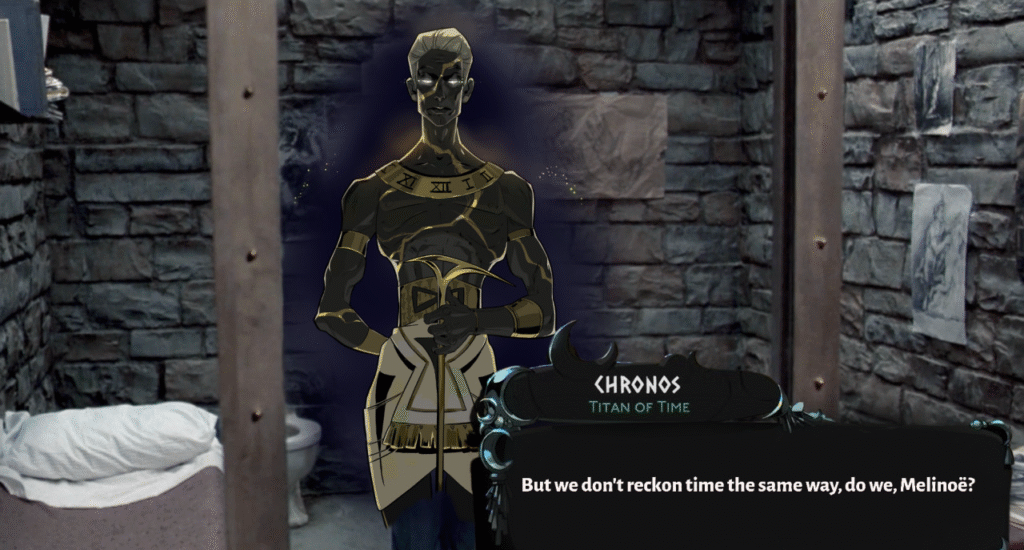
Also completely unrelated: I still can’t get Supergiant to confirm his voice was supposed to be this:
(Every time he opens his mouth I hear “Tell me, Melinoë…”)