I just wrote a bunch of shit down somewhat tangentially associated in my thought process (yes, that is my entire blog). I’m not editing this because it’s been sitting open in my browser for like a week. Well, I strongly feel it’s all related.
Equipment Improvement Cycle and the Striving Meritocracy
RPG mechanic rhetoric as life advice is not new to me, personally, because I hang out with nerds who grew up with RPGs and are of a strategic bent, but the past several years the language of ‘maximizing’ and ‘optimizing’ has been prevalent in the mainstream. It’s a comforting response to a world that is fundamentally becoming less fair and a useful belief to encourage in the masses; it’s the meritocracy promise writ in nerd language. It is also useful in that it encourages consumerism–we start to think that purchases we make in real life will ease our lives as purchases in weapon shops ease our battling. To purchase, to upgrade, is an integral part of progressing, of moving the narrative forward. Consuming becomes doing something to materially improve your life–you can feel you at least did something productive today, something that will have an impact in material reality. It’s bad on Instagram if you have hobbies or cats–a nonstop flood of things that will, supposedly, materially elevate the craft or the cat’s QOL.

I swear I’ve written about this before — offering the purchase of productivity, when somebody is already feeling kind of shit for doomscrolling. The ads are so tactile–unboxing, opening, the basic physical pleasures one is not experiencing while scrolling but which we sense are on some basic level healing–that they almost feel like a vicarious screen break.
Minmaxing life run, or just maxing and excising the ‘min’
Mid-aughts in the leadup to the Marvel slop movies and the mainstreaming of ‘nerd’ culture there was an in-group heavy, T-shirt sloganeering, pithy take on nerd culture–when it was still being marketed as a true subculture, an offshoot of goth/alternative/hacker culture Hot Topic cashed in on.* Marketing fitness to nerds by using terms such as ‘leveling up’ and ‘grinding’ to mean putting in hours of basic hygiene and basal-level exercise was prevalent, but I could not think of a self-respecting normie–the kind of guy who is fully seeped in Manosphere culture and rhetoric now–who would be associated, voluntarily. I have not yet seen this sort of (formal) marketing for Ozempic/other GLP-1 agonists–the pharmaceutical companies are toeing the line right now by presenting it as a last-resort response to obesity, and their ads feature people who are truly obese, not chubby but looking to lose vanity weight–but I will bet in five, ten years the message will shift toward optimization of the self. I will be interested to see if the average BMI of the “protagonist” of the GLP-1 commercials goes down with time. The thing is, losing weight does make one feel better, physically; one has more energy, physical endeavors are easier, one’s own body is lighter. Anybody who has had weight cycle knows the benefits are not merely aesthetic or psychological.
Conflict/Quest Story
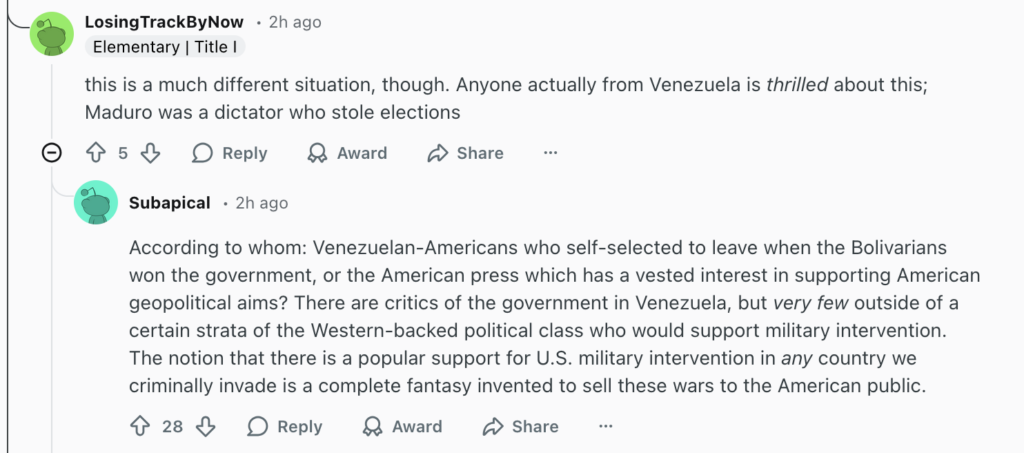
The superhero-narrative-as-jingoistic-propaganda–a more upbeat war propaganda than what I think of as “shoot and cry” films, wherein American soldiers suffer greatly because they’ve had to kill innocent people in combat, and they had no choice–that basically is the Marvel universe started a bit late, a few years after the 9/11 hypernationalist fervor into which a nation itching for a Noble War and a Reason to Live after the End of History was pitched. It functioned as a post-hoc justification for that decade of American invasions, a balm for the public conscience. It does not much matter if it was a conscious decision or not; this was its function. The extent to which this comes of a desire to redeem image after [every war since WWII] I do not know. But it is useful to the powers that be, no matter its source, and so it is encouraged. To have a populace that believes in the myth of its own national good-guy-ness is useful and the general hard right shift in tenor post 9/11 occurred in the penumbra of late 90s WWII romanticism-cum-nostalgia for younger days of the cohort that was aging into retirement.* So much of our media, at that time, catered to the generation that fought World War II, my grandfather’s generation–god knows the war figured large enough in his personal life narrative. All ages were saturated in Good War and Just War narratives, wherein being a part of a military band of brothers was the cure to the modern ails of alienation, ennui, lack of meaning or purpose. These narratives were a balm for the stupor of too much domesticity and predictability at the end of history (wherein History is when exciting things happen and one could make a difference)–in these narratives, and, therefore, during a Just War, one’s individual courage and grit meant something. Being a good bloke with a can-do attitude was enough during the War to make you heroic, a Somebody, part of a community, in the same way that being same pre-de-industrialization was enough to guarantee you a solid job and economic stability. It does not matter if any of this is correct in any objective or measurable sense. It is what the perception was, and perception molds behavior, which includes voting.
Narrative is contextualization, which is the cure for alienation. And the superhero narratives are narratives of conflict.
I’m rehashing somewhat poorly Graeber and Wengrow’s ideas in The Dawn of Everything about the narrative we attach to human history –that History happens, or that life actually progresses, when there is something monumental to document, usually conflict, and all other times are a holding period in the grand narrative of life. Ursula K. Le Guin addresses this sentiment in “Betrayals”, a short story in the collection Four (now Five) Ways to Forgiveness:
What would that world be, a world without war? It would be the real world. Peace was the true life, the life of working and learning and bringing up children to work and learn. War, which devoured work, learning, and children, was the denial of reality.
This is in the broader context of discussing a people whose entire lives have been shaped by conflict and who are at a collective loss for how to find meaning in peace. It is a beautiful collection of stories meditating on multi-generational war trauma, on how ‘victim’ is not a moral standing but a relational standing in a power structure–the experience of being a victim can give insight and empathy but does not preclude seizing the advantage when one has it and acting against others as acted against in the past, so long as that power structure, that way of thinking, remains. But, the basic idea that peacetime is when ‘true life’ proceeds–the idea that life and narrative are not defined by conflict–in itself was powerfully put.
————
*Incidentally, this was the era of mishmash nerd culture wherein the peak of nerd cache was a graphic T shirt integrating two or three fandoms — Luke Skywalker in the TARDIS kind of thing. A lot of the core aesthetics of nerd culture from that era are still prevalent, just now in the mainstream, but the mishmash cross-franchise stuff I have not seen nearly as much.
*This cohort was also aging; nostalgia itself, the recalling of youth and the feeling of your life being ahead of you, is a powerful sell. That their youth coincided with this grand war reinforces in the mind the “real life is conflict” association.