信じる心力になる / The believing heart becomes power
The first episode of the Magic Knight Rayearth remake dropped today, and given how much that show is stitched into my childhood psyche, of course I watched it.
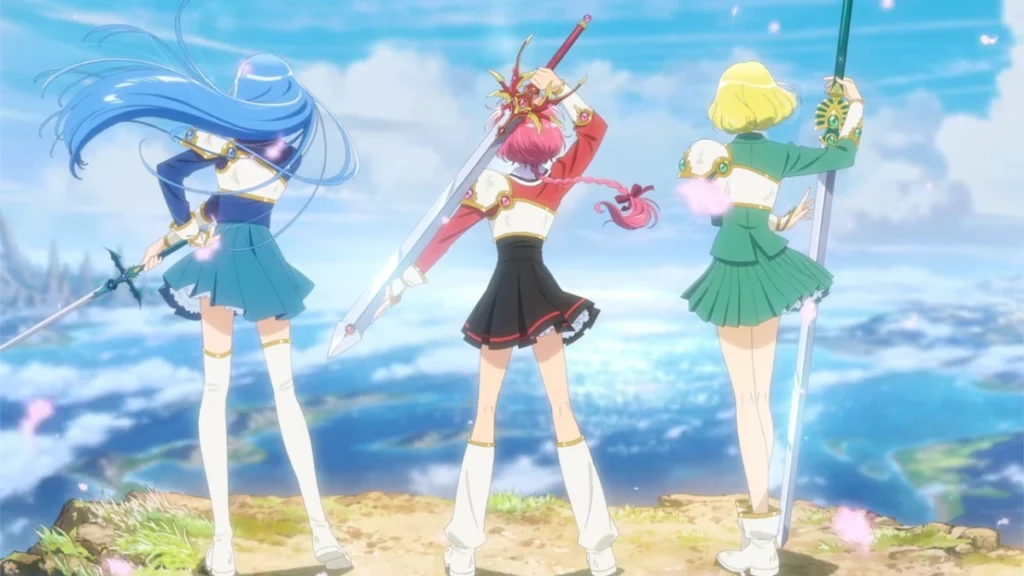
And it’s… okay. It’s blow-for-blow the original anime, which was blow-for-blow the manga (in the first part). To the point I was mentally quoting it (and not just 「助けて、伝説のマギっクナイトたちよ。。。」) and given that I originally watched it during what was that period of childhood when kids obsessively re-watch things intersected with the 90s scarcity of anime in the US so you watched to death what you could find, I could have done the storyboards from memory. So, I am not sure what the point is or why it exists. The original animation from 1994 holds up fine and I would argue is more charming, and the music thus far isn’t as good.
Although I will say, in the interest of full disclosure: this was still me when the original version of Yuzurenai Negai started playing at the end. Absolute banger.
The stories we tell again and again
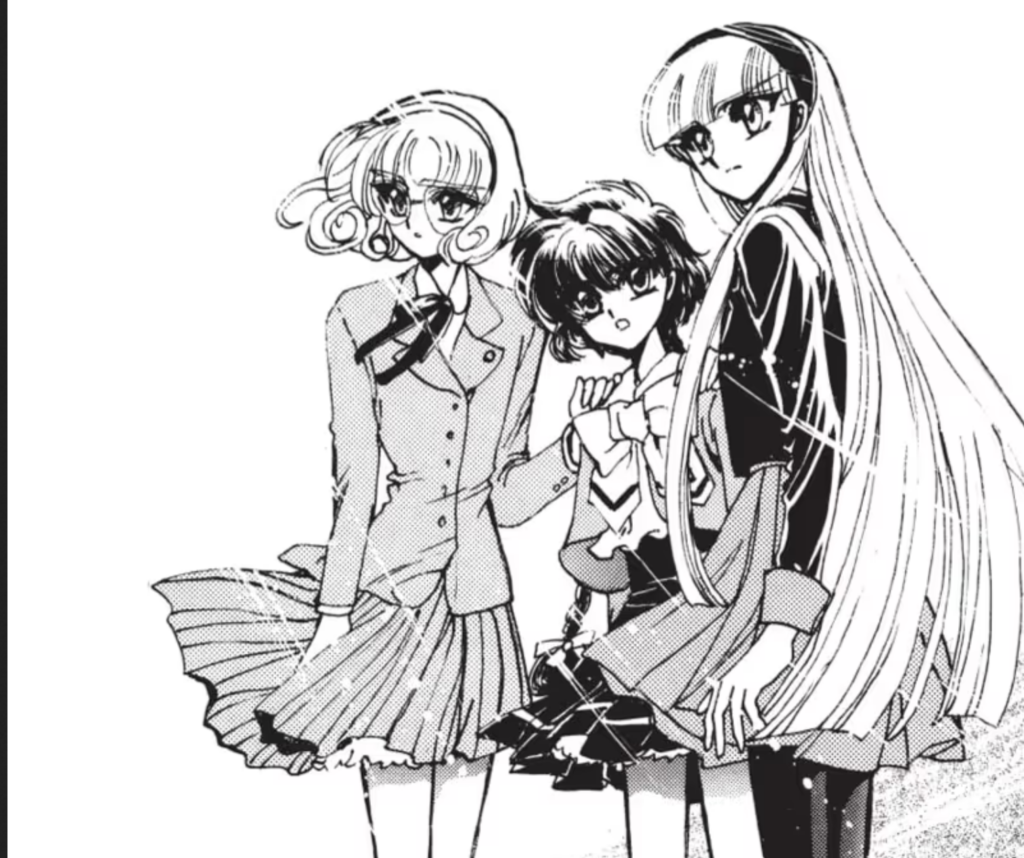
How this is different from other manga-faithful retools like Sailor Moon Crystal and Fullmetal Alchemist: Brotherhood, I am not sure. For both of those properties, which were huge, the manga did substantially differ from the 90s anime, and for Sailor Moon at least Naoko Takeuchi demanded they redo the anime per the manga if they wanted to re-license merch, the truer-to-the-spirit live-action notwithstanding.* The original Rayearth season 1 at least was a blow-by-blow of the manga and they didn’t start with things like pulling punches around Hikaru’s ménage with Eagle and Lantis or adding Nova until the second season. Surely this won’t be a blow-by-blow just to set up redoing the second season more in the spirit of the manga?
Maybe we’re reverting to cartoons being first and foremost advertisements for toys (and there are indeed some new figures out and Good Smile just announced Nendos), but, again, I cannot see how it doesn’t make sense just to start airing the original show again. It’s that similar. It isn’t upgraded for modern technology or sensibilities; the show explicitly takes place in 1993, the year the manga started. In that way it reminds me of the Netflix Ranma 1/2 remake, which also takes place “sometime in the 80s” (largely, I suspect, because phone camera technology would make a lot of the gags and subplots no longer work) and is in the first few episodes a near blow-by-blow of the original. It tightens up considerably once that initial introduction-of-Ranma plotline is tied, after Ryoga is established. But–despite that, I had a really good time watching the Ranma 1/2 remake, and so far the Rayearth remake has felt hollow. And I felt this way at the same point in the Ranma 1/2 remake – one episode in. I felt the love in a way I did not feel with Rayearth, and I’ll have to think about why that is.
I suspect this is partially because on its face the beginning of Rayearth just isn’t that good–it is only later in the context of the Big Reveal that the RPG-like blow-for-blow progression (as Fuu keeps pointing out) becomes something–and Ranma has a solid character-driven screwball premise that holds its narrative own. But, this is thirty-or-forty-year-old me in the twenty-twenties saying this, separated by both age and exposure to narrative variety. Ten-year-old me had rarely seen the like and found novelty on its face. And it was centered on girls–all girls adventure team, not one random chick whose personality is “chick” on the team that is otherwise multiple types of boy. This was still new enough to me to feel heady and subversive, an acknowledgement of the complexity of my inner life.
Hold on to that dream
(All of this presumes you know the ending to the original Magic Knight Rayearth, although for reasons I outline in a bit, I suspect the contemporary first-time viewer might not be shocked by any of this. Spoilers nonetheless.)
I’ve talked a bit about narrative pacing in the era of TikTok, and the extent to which older, ‘classic’ works get something of a pass or more patience than we would give new works to get good because we have some assurance of the quality of the overall work. I wonder how Magic Knight Rayearth (2026), if it was a completely new property debut, would be perceived — if it would be given the time and space to develop into what the second part of the series was, and I maintain the ‘power’ of that deconstruction came from how straight it was played at first, and the very fact that it was not expected. Now every time I see something seemingly earnest I suspect something is up. There’s a catch, or something that is revealed to be corrosive to somebody. And I admit I have developed the same impatience — a work does not have long to ‘grab’ me. Spoiled for choice or spoiled by time, or spoiled by the zeitgeist of ‘tight’ stories, I would not approach Rayearth with the same open earnest heart today. And I do not know if it would have the same ultimate impact anyway.
How do I describe the difference in RPG-then and lit-RPG now, when they present within a framework of equal formulaity? There was not a winking sense of irony, a holdover of genre over-savvyness and quippiness, the 2000’s terror of being earnest or, that most contemptible of American specters, a sucker.
This is all to say: I do not know if a deconstruction will hit the same in 2026. The stories I knew of as a kid in the 90s were largely played straight, as it were, earnest stories of good versus evil. I was pretty young when I saw Rayearth–the only JRPG I had played at the time was Pokemon, which is nothing if not straightforward and earnest, and the only other anime I had watched was Sailor Moon on Toonami and some of the original Ranma 1/2 Viz dubs. Western media for kids, for the most part, played it very straight and simple–a bad guy who wants to do bad things and the good guys who stop them–which included the Redwall books, all of which I had read multiple times, and every fantasy book I could find in the school library, which was largely older classics like Narnia.* These older more straightforward works can still get me emotional through recalling how they made me feel back then, brave and resolute with a bracing moral clarity and certitude about what was The Right Thing to Do. Were I to read Redwall for the first time now, I would not get the same enjoyment. Fondness for the holy fool-type heroes, sure, but fondness at a remove. It falls into the category of books that I acknowledge were great for kids but do not scale well to adults, and, yes, I do believe those books exist.
In very short order (shoutout to the place that very illegally rented fansub VHSs and was my exposure to a lot of shows way before domestic release and way before I had the autonomy to go ordering fansubs off some Geocities website) I was exposed to more ambiguous/deconstructionist narratives like Evangelion and Utena, and eyebrow-raising age gaps in other CLAMP works like Cardcaptor Sakura, but the day I watched Magic Knight Rayearth season 1 episode 20, that twist ending was mind-blowing. And it is an abrupt ending–the final battle happens, and then the girls are back at Tokyo Tower and Hikaru is screaming “It’s not fair!”, and credits, IIRC with the ‘sad’ version of the usual closing song. I just sat with the enormity of that for some time, metaphorically and literally–I spent hours wandering up and down the chalk hills at the cul-de-sac by my house thinking about this, over and over. Given the way kids perceive time what I remember as “a long time” might well have been a few days before I assimilated it and started wondering why all stories didn’t have good guys who might be doing bad things, or bad guys who weren’t bad guys, or otherwise some degree of subversion that to a middle American kid raised on stories of heroism had the valence of taboo. I was That Kid in many ways, one of which was babbling to any adults polite enough not to shoo me off about my Stories, and my teachers seemed perplexed or vaguely uncomfortable or uncomprehending — ‘why put that sort of thing into a kids’ story’ kind of reaction. A vague suspicion of psy-op that I think to most Americans was never articulated explicitly but was a holdover from the Red Scare, a sense of nuance getting too close to apologetic for the wrong sort of person or beliefs.
(Well, now that feeling is being explicitly stated, if not defined: it is what gets something accused of being ‘woke’.)
Aside on 90s dub music
The original Rayearth got a Media Blasters dub, which meant it also got a banger English version of the opening like Rurouni Kenshin and Yu Yu Hakusho. The lyrics held up well enough in translation to be used as-is in AmaLee’s English covers; other English-cover anime openings in her repertoire got a solid re-translation if one did not exist or wasn’t all that good. With few exceptions it was grim out there in American cartoon opening songs, and you could sense the utter contempt American TV executives had for American children.
—
*I love the manga/live action version of Sailor Mars, and irony of ironies Kunihiku Ikuhara was instrumental in turning her into a considerably less interesting version in the 90s anime, when that man usually cooks.
**Tamora Pierce was a revelation to find, and I spent a lot of my time reading her books paranoid-looking-over-my-shoulder when there was even oblique reference sex or periods or whatever, as they directly dealt with sexism and in the Redwall books, for all their straightforward adventure character, sexism and sex per se did not really exist–there were female warriors and abbesses and pirates etc–but they could get pretty bloody. I was a 90s American kid; a little gore was fine for me to handle, but any whiff of sexuality was to be scrubbed from my milieu.) The Daine books were even more suggestive than the Alanna books, and my school only had Song of the Lioness. The other Tortall books had not yet been authored.
Leave a Reply