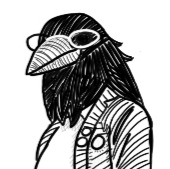
A continuation, I reckon, of a re-read of Stephen Fry’s Greek myths, certainly not because Hades II had a recent full release or anything so puerile as that, though this time I’m all the way at the Odyssey.
Telemachus, son-of-Odysseus, looks just like his old man–a “chip off the old block” as Helen-via-the relentlessly-English-Fry puts it. That is the reaction he gets when meeting anybody who knew his father — immediate, reflexive, almost awe. Telemachus at this point in the story does not remember his father, as the latter was summoned to the Trojan campaign when the former was but an infant. But, from birth, in his mother’s eyes, the ghost of his father hovers over him and everything he does.
I was struck by how familiar this was–this was a motif in my own life.
That was common enough when I was growing up close to the small town where he grew up, visiting often. This is a small town in a “small state”, in the sense that it is a rural state and everybody seems to know or have connection to each other who has lived there long enough. It was not a recognition I anticipated I would get ever again once I had moved out of that temporal and geographical sphere. Yet, as fate had it, one of the administrators in my department at a world-class school in a world-class city knew my father in childhood. One Christmas party I was chatting with her and my mentor when she said, seemingly out of nowhere, “You look so much like your father.” (My mentor, who knew my roots were deeply rural, was shocked–I had not told him happenstance had placed an old family friend from another world in our little department in our massive school.) It was unbidden, a burst that comes of no longer being able to hold something back, from being overwhelmed by a thought. I have spent a lot of time thinking about that encounter. I was an anachronism, a powerful anchor for nostalgia, well out of time. I wish I recall what I had been saying, or what my facial expression had been, or what I had been wearing. Something to clue me in to what, precisely, was the last straw.
I was an adult when I first saw a photograph of my father in his youth, in his high school yearbook. Time had not yet masculinized him as much as it had when I knew him, or even saw photographs in college, and I felt I was looking at a photograph of myself. Me, a bit broader in jaw in shoulder, a bit more heavy of bone, but even dressed the same was I was for my senior photographs in black suit and tie.
Those gasping reactions I used to get from people who knew my dad — “You look exactly like your father” — are a time-limited state of being-understood. People who see me through the lens of him will die out and should the fates favor me to live that long there will come a time when no-one on earth will see me by my resemblance to my father; or, rather, the people who knew my father before they knew me–who see me in the context of him as the primary relation–will die off. This does not feel like losing “myself” but it is a loss of a link. A loss of a function as a mirror, which can reveal things about oneself by comparison. Not all it reveals will be flattering, but it will be worth thinking about, if I have the courage to do it with an honest mind. The resemblances are not merely physical. I’ll leave it at that.
Not all are familiar with the dynamics of rural areas — large geographical swaths with small populations, small state capitals, small universities, the same institutions in huge populated states but writ small where everyone seems to know everyone else. The offices that require geographical distribution — doctors, professors, lawyers, the sort of office where you need a baseline of X practitioners per X unit land regardless of population density–that create a small pond for some large fish. The setting of the Odyssey, a collection of city-states we now think of as “Greek” largely, would have been similar — there is room for each large personality to become well-known. I am reminded of Dunbar’s number here — that each person can remember maybe 150 people intimately, regardless of the population density in which they live, and at lower densities the odds favor somebody-knowing-somebody-who-knows-you.
I had thought in coming to California I had forfeited any likelihood I would be evaluated through the prism of family. It is liberating. Alienation often is. But alienation is decontextualizing, and I have an inordinate respect for context, for understanding a person through their place in the matrix of relationships that created them. Maybe that is why I so like multi-generational epics.
Leave a Reply